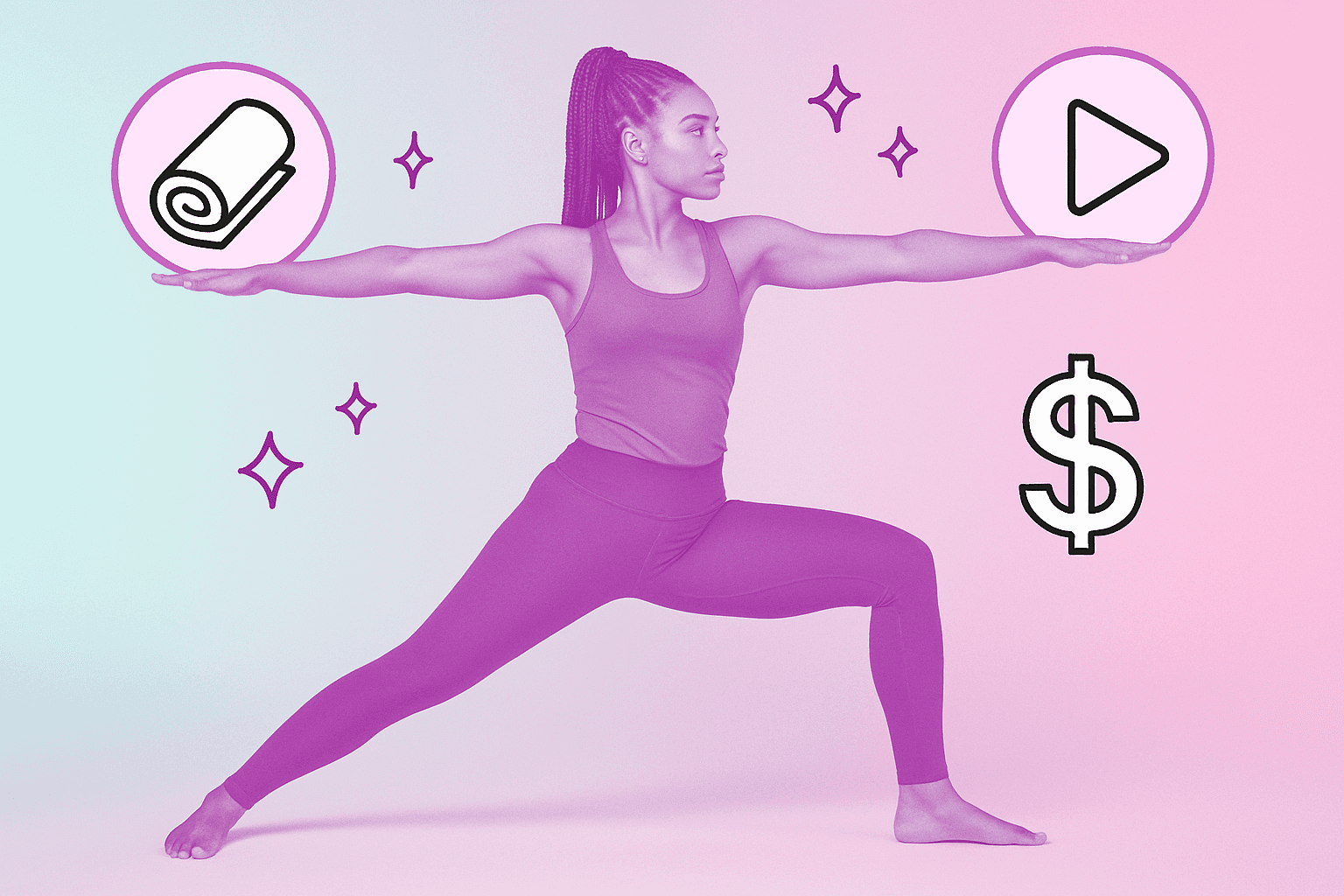
You've been teaching yoga for years, but when it comes to selling your knowledge online, things feel less... zen.
You’ve been teaching yoga for years. You know how to guide students through challenging poses, create transformative sequences, and hold space for healing. But when it comes to selling your knowledge online, things feel less… zen.
Here’s the thing: yoga translates beautifully to online courses. Your students crave the flexibility to practice on their own schedule, and you deserve to scale your income beyond one-on-one sessions and packed studio classes.
Key Facts
Online yoga market size reached $8.2 billion in 2025 - representing 43% growth year-over-year as practitioners seek flexible home practice options
Yoga instructors earn 312% more through online courses compared to in-person classes - with successful course creators generating $5,000-$50,000+ monthly versus $75-$150 per class
73% of yoga students prefer self-paced learning over live sessions - citing schedule flexibility and ability to repeat challenging sequences as primary motivators
Course platforms charging 0% transaction fees save creators $2,940 annually - based on average yoga course sales of $49,000 per year versus platforms charging 6% fees
(Already have your course idea mapped out? Give Teachery a try - but first, let’s cover the strategy that actually sells.)
Why Yoga is Perfect for Online Courses
Yoga might seem like it requires in-person instruction, but online courses actually solve some of yoga’s biggest challenges.
Students practice when it works for them. Your working mom doesn’t have to choose between yoga and picking up her kids. Your busy executive can flow at 5 AM or 10 PM. You’re removing the biggest barrier to consistent practice: scheduling.
Beginners feel less intimidated. That person who’s been “meaning to try yoga” for three years? They’re not walking into a studio full of people doing perfect handstands. They can fumble through their first sun salutation in private, rewind when they need to, and build confidence at their own pace.
You can go deeper than drop-in classes allow. Studio classes are often one-size-fits-all. In your course, you can create targeted sequences for specific goals: hip flexibility for desk workers, strength building for runners, or stress relief for new parents.
Your income isn’t capped by studio capacity. You can only fit so many students in a room, and you can only teach so many classes per week. Online courses let you help hundreds of students simultaneously while you sleep.
What to Include in Your Yoga Course
The best yoga courses don’t just string together random poses. They solve a specific problem or help students achieve a particular goal. Here’s how to structure yours:
Foundation Module: Breath and Alignment
Start with the basics that most students skip in regular classes. Teach proper breathing techniques, basic alignment principles, and how to set up a home practice space. This isn’t boring - it’s the foundation that prevents injury and deepens practice.
Core Sequences (3-4 modules)
Build your course around 3-4 signature sequences that progress in difficulty. For a “Yoga for Flexibility” course, you might include: Lower Body Release, Upper Body Opening, Full Body Flow, and Advanced Stretches. Each module should have a 20-30 minute practice plus shorter variations.
Modification and Props Module
Show students how to adapt poses for different bodies and abilities. Cover common props (blocks, straps, bolsters) and how to use household items as substitutes. This is where you demonstrate your teaching expertise - not just what poses to do, but how to make them work for everyone.
Troubleshooting Common Issues
Address the problems students face but rarely ask about: tight hamstrings, weak wrists, lower back pain, or feeling “not flexible enough.” Create short videos addressing each issue with specific modifications and strengthening exercises.
Building Your Home Practice
Teach students how to practice independently. Cover how often to practice, how to listen to their body, when to push and when to rest, and how to stay motivated without a teacher guiding every breath.
Bonus: Quick Flows for Busy Days
Include 5-10 minute sequences for when students don’t have time for a full practice. Morning energizers, desk break stretches, or bedtime wind-downs. These keep students engaged when life gets hectic.
Community Component
Create a private Facebook group or forum where students can ask questions, share progress, and support each other. This transforms your course from a series of videos into an ongoing experience.
How to Price Your Yoga Course
Yoga course pricing depends on depth, duration, and what you include. Here’s what we’ve seen work:
Self-paced courses with video content only: $47-$197
This works for straightforward skill-building courses. Think “30-Day Morning Yoga Challenge” or “Yoga for Back Pain Relief.” Students get lifetime access to videos and written materials, but no direct interaction with you.
Courses with community access: $197-$397
Add a private Facebook group or forum where you answer questions weekly. The community support justifies the higher price, and students get much better results when they can ask for help.
Premium courses with live components: $397-$797
Include monthly live Q&A sessions, live workshops, or small group calls. This pricing works when you’re positioning yourself as a premium instructor with specialized expertise.
High-touch certification programs: $997-$2,997
If you’re training other yoga teachers or offering a comprehensive transformation program with personal feedback, you can command these prices. But you need serious credentials and proven results to justify them.
Start with the lower end unless you have a strong personal brand or specialized expertise. You can always raise prices for future students as you build credibility and testimonials.
How to Find Students and Sell Your Course
The “build it and they will come” approach doesn’t work. Here’s how to actually get your course in front of potential students:
Start With Your Existing Students
Your current students are your easiest first sales. They already trust your teaching and know your style works for them. Offer them early access at a discount in exchange for feedback and testimonials.
If you don’t have students yet, you can still launch successfully - but you’ll need to work harder at building relationships first.
Partner With Local Studios and Teachers
Reach out to yoga studios in your area (or online) and offer to teach a free workshop that previews your course content. At the end, mention your online course for students who want to go deeper.
You can also partner with other yoga teachers who serve different niches. If you specialize in flexibility and they focus on strength, you can cross-promote each other’s courses.
Content Marketing That Actually Works
Create helpful content on Instagram, YouTube, or TikTok that showcases your teaching style. Don’t just post pretty poses - solve problems. “3 Stretches for Tight Hip Flexors” or “How to Modify Chaturanga for Weak Wrists” gets shared more than another sunset warrior pose.
The key is consistency. Post 3-4 times per week for at least 3 months before expecting significant results. Real talk: this is slow but it builds a genuinely interested audience.
Email List Building
Offer a free mini-course or PDF guide in exchange for email addresses. “5-Day Hip Opening Challenge” or “Complete Guide to Setting Up Your Home Practice” work well for yoga audiences.
Then email your list weekly with helpful tips, behind-the-scenes content, and occasional course promotions. The money is in the relationship, not the first interaction.
Paid Advertising (Advanced)
Facebook and Instagram ads can work for yoga courses, but they’re tricky. Yoga students often need time to warm up to new teachers. Consider ads only after you have organic content working and testimonials to prove your course gets results.
Getting Started: Why Teachery Works for Yoga Courses
You could use any course platform, but here’s why Teachery works particularly well for yoga teachers:
Design flexibility matters for wellness brands. Your course platform should reflect your teaching style and brand aesthetic. With Teachery’s complete design customization - including custom font uploads and unlimited color options - you can create a learning environment that feels as calming and intentional as your yoga practice.
Zero transaction fees on all plans. When you’re starting out and testing price points, every dollar matters. Other platforms charge 5-10% transaction fees that eat into your profits. Teachery charges 0% always, so more money stays in your pocket.
Lifetime Deal at $950. If you’re serious about building an online yoga business, Teachery’s Lifetime Deal pays for itself after just a few course sales. No monthly fees ever - just your course revenue.
The reality is that most yoga teachers undercharge for their expertise. You’ve spent years (maybe decades) developing your skills. You understand anatomy, energy, and how to create transformative experiences. That knowledge deserves to be packaged thoughtfully and sold at prices that reflect its value.
Your online yoga course isn’t just another fitness video. It’s a pathway to flexibility, strength, stress relief, or whatever transformation you specialize in. Price it accordingly, market it consistently, and use a platform that lets you present it beautifully.
Related Reading
Frequently Asked Questions
How much money can you make selling yoga courses online?
Successful yoga course creators typically earn between $5,000 to $50,000 per month, with beginners often starting around $1,000-$3,000 monthly. The key factors affecting earnings include course pricing (usually $97-$497), student enrollment numbers, and whether you offer one-time purchases or subscription models.
What platform is best for selling yoga courses with no transaction fees?
Teachery stands out as the top choice for yoga instructors, offering unlimited courses and students for just $49/month with 0% transaction fees on all plans. Unlike other platforms that charge 3-10% per sale, Teachery’s no-fee structure means you keep 100% of your revenue, which can save thousands annually for successful course creators.
How long should an online yoga course be for maximum sales?
The most profitable online yoga courses contain 4-8 hours of content spread across 6-12 modules, typically delivered over 30-90 days. Students prefer bite-sized 20-30 minute lessons they can complete in one session, with 67% of buyers completing courses structured this way versus only 23% finishing longer formats.
What equipment do you need to create professional yoga course videos?
You can start with just a smartphone and basic lighting setup costing under $300 total. Essential equipment includes a phone tripod ($25-$50), ring light or window lighting, wireless microphone ($50-$100), and a clean, uncluttered background or yoga mat space measuring at least 8x6 feet.
You’ve been teaching yoga for years. You know how to guide students through challenging poses, create transformative sequences, and hold space for healing. But when it comes to selling your knowledge online, things feel less… zen.
Here’s the thing: yoga translates beautifully to online courses. Your students crave the flexibility to practice on their own schedule, and you deserve to scale your income beyond one-on-one sessions and packed studio classes.
Key Facts
Online yoga market size reached $8.2 billion in 2025 - representing 43% growth year-over-year as practitioners seek flexible home practice options
Yoga instructors earn 312% more through online courses compared to in-person classes - with successful course creators generating $5,000-$50,000+ monthly versus $75-$150 per class
73% of yoga students prefer self-paced learning over live sessions - citing schedule flexibility and ability to repeat challenging sequences as primary motivators
Course platforms charging 0% transaction fees save creators $2,940 annually - based on average yoga course sales of $49,000 per year versus platforms charging 6% fees
(Already have your course idea mapped out? Give Teachery a try - but first, let’s cover the strategy that actually sells.)
Why Yoga is Perfect for Online Courses
Yoga might seem like it requires in-person instruction, but online courses actually solve some of yoga’s biggest challenges.
Students practice when it works for them. Your working mom doesn’t have to choose between yoga and picking up her kids. Your busy executive can flow at 5 AM or 10 PM. You’re removing the biggest barrier to consistent practice: scheduling.
Beginners feel less intimidated. That person who’s been “meaning to try yoga” for three years? They’re not walking into a studio full of people doing perfect handstands. They can fumble through their first sun salutation in private, rewind when they need to, and build confidence at their own pace.
You can go deeper than drop-in classes allow. Studio classes are often one-size-fits-all. In your course, you can create targeted sequences for specific goals: hip flexibility for desk workers, strength building for runners, or stress relief for new parents.
Your income isn’t capped by studio capacity. You can only fit so many students in a room, and you can only teach so many classes per week. Online courses let you help hundreds of students simultaneously while you sleep.
What to Include in Your Yoga Course
The best yoga courses don’t just string together random poses. They solve a specific problem or help students achieve a particular goal. Here’s how to structure yours:
Foundation Module: Breath and Alignment
Start with the basics that most students skip in regular classes. Teach proper breathing techniques, basic alignment principles, and how to set up a home practice space. This isn’t boring - it’s the foundation that prevents injury and deepens practice.
Core Sequences (3-4 modules)
Build your course around 3-4 signature sequences that progress in difficulty. For a “Yoga for Flexibility” course, you might include: Lower Body Release, Upper Body Opening, Full Body Flow, and Advanced Stretches. Each module should have a 20-30 minute practice plus shorter variations.
Modification and Props Module
Show students how to adapt poses for different bodies and abilities. Cover common props (blocks, straps, bolsters) and how to use household items as substitutes. This is where you demonstrate your teaching expertise - not just what poses to do, but how to make them work for everyone.
Troubleshooting Common Issues
Address the problems students face but rarely ask about: tight hamstrings, weak wrists, lower back pain, or feeling “not flexible enough.” Create short videos addressing each issue with specific modifications and strengthening exercises.
Building Your Home Practice
Teach students how to practice independently. Cover how often to practice, how to listen to their body, when to push and when to rest, and how to stay motivated without a teacher guiding every breath.
Bonus: Quick Flows for Busy Days
Include 5-10 minute sequences for when students don’t have time for a full practice. Morning energizers, desk break stretches, or bedtime wind-downs. These keep students engaged when life gets hectic.
Community Component
Create a private Facebook group or forum where students can ask questions, share progress, and support each other. This transforms your course from a series of videos into an ongoing experience.
How to Price Your Yoga Course
Yoga course pricing depends on depth, duration, and what you include. Here’s what we’ve seen work:
Self-paced courses with video content only: $47-$197
This works for straightforward skill-building courses. Think “30-Day Morning Yoga Challenge” or “Yoga for Back Pain Relief.” Students get lifetime access to videos and written materials, but no direct interaction with you.
Courses with community access: $197-$397
Add a private Facebook group or forum where you answer questions weekly. The community support justifies the higher price, and students get much better results when they can ask for help.
Premium courses with live components: $397-$797
Include monthly live Q&A sessions, live workshops, or small group calls. This pricing works when you’re positioning yourself as a premium instructor with specialized expertise.
High-touch certification programs: $997-$2,997
If you’re training other yoga teachers or offering a comprehensive transformation program with personal feedback, you can command these prices. But you need serious credentials and proven results to justify them.
Start with the lower end unless you have a strong personal brand or specialized expertise. You can always raise prices for future students as you build credibility and testimonials.
How to Find Students and Sell Your Course
The “build it and they will come” approach doesn’t work. Here’s how to actually get your course in front of potential students:
Start With Your Existing Students
Your current students are your easiest first sales. They already trust your teaching and know your style works for them. Offer them early access at a discount in exchange for feedback and testimonials.
If you don’t have students yet, you can still launch successfully - but you’ll need to work harder at building relationships first.
Partner With Local Studios and Teachers
Reach out to yoga studios in your area (or online) and offer to teach a free workshop that previews your course content. At the end, mention your online course for students who want to go deeper.
You can also partner with other yoga teachers who serve different niches. If you specialize in flexibility and they focus on strength, you can cross-promote each other’s courses.
Content Marketing That Actually Works
Create helpful content on Instagram, YouTube, or TikTok that showcases your teaching style. Don’t just post pretty poses - solve problems. “3 Stretches for Tight Hip Flexors” or “How to Modify Chaturanga for Weak Wrists” gets shared more than another sunset warrior pose.
The key is consistency. Post 3-4 times per week for at least 3 months before expecting significant results. Real talk: this is slow but it builds a genuinely interested audience.
Email List Building
Offer a free mini-course or PDF guide in exchange for email addresses. “5-Day Hip Opening Challenge” or “Complete Guide to Setting Up Your Home Practice” work well for yoga audiences.
Then email your list weekly with helpful tips, behind-the-scenes content, and occasional course promotions. The money is in the relationship, not the first interaction.
Paid Advertising (Advanced)
Facebook and Instagram ads can work for yoga courses, but they’re tricky. Yoga students often need time to warm up to new teachers. Consider ads only after you have organic content working and testimonials to prove your course gets results.
Getting Started: Why Teachery Works for Yoga Courses
You could use any course platform, but here’s why Teachery works particularly well for yoga teachers:
Design flexibility matters for wellness brands. Your course platform should reflect your teaching style and brand aesthetic. With Teachery’s complete design customization - including custom font uploads and unlimited color options - you can create a learning environment that feels as calming and intentional as your yoga practice.
Zero transaction fees on all plans. When you’re starting out and testing price points, every dollar matters. Other platforms charge 5-10% transaction fees that eat into your profits. Teachery charges 0% always, so more money stays in your pocket.
Lifetime Deal at $950. If you’re serious about building an online yoga business, Teachery’s Lifetime Deal pays for itself after just a few course sales. No monthly fees ever - just your course revenue.
The reality is that most yoga teachers undercharge for their expertise. You’ve spent years (maybe decades) developing your skills. You understand anatomy, energy, and how to create transformative experiences. That knowledge deserves to be packaged thoughtfully and sold at prices that reflect its value.
Your online yoga course isn’t just another fitness video. It’s a pathway to flexibility, strength, stress relief, or whatever transformation you specialize in. Price it accordingly, market it consistently, and use a platform that lets you present it beautifully.
Related Reading
Frequently Asked Questions
How much money can you make selling yoga courses online?
Successful yoga course creators typically earn between $5,000 to $50,000 per month, with beginners often starting around $1,000-$3,000 monthly. The key factors affecting earnings include course pricing (usually $97-$497), student enrollment numbers, and whether you offer one-time purchases or subscription models.
What platform is best for selling yoga courses with no transaction fees?
Teachery stands out as the top choice for yoga instructors, offering unlimited courses and students for just $49/month with 0% transaction fees on all plans. Unlike other platforms that charge 3-10% per sale, Teachery’s no-fee structure means you keep 100% of your revenue, which can save thousands annually for successful course creators.
How long should an online yoga course be for maximum sales?
The most profitable online yoga courses contain 4-8 hours of content spread across 6-12 modules, typically delivered over 30-90 days. Students prefer bite-sized 20-30 minute lessons they can complete in one session, with 67% of buyers completing courses structured this way versus only 23% finishing longer formats.
What equipment do you need to create professional yoga course videos?
You can start with just a smartphone and basic lighting setup costing under $300 total. Essential equipment includes a phone tripod ($25-$50), ring light or window lighting, wireless microphone ($50-$100), and a clean, uncluttered background or yoga mat space measuring at least 8x6 feet.