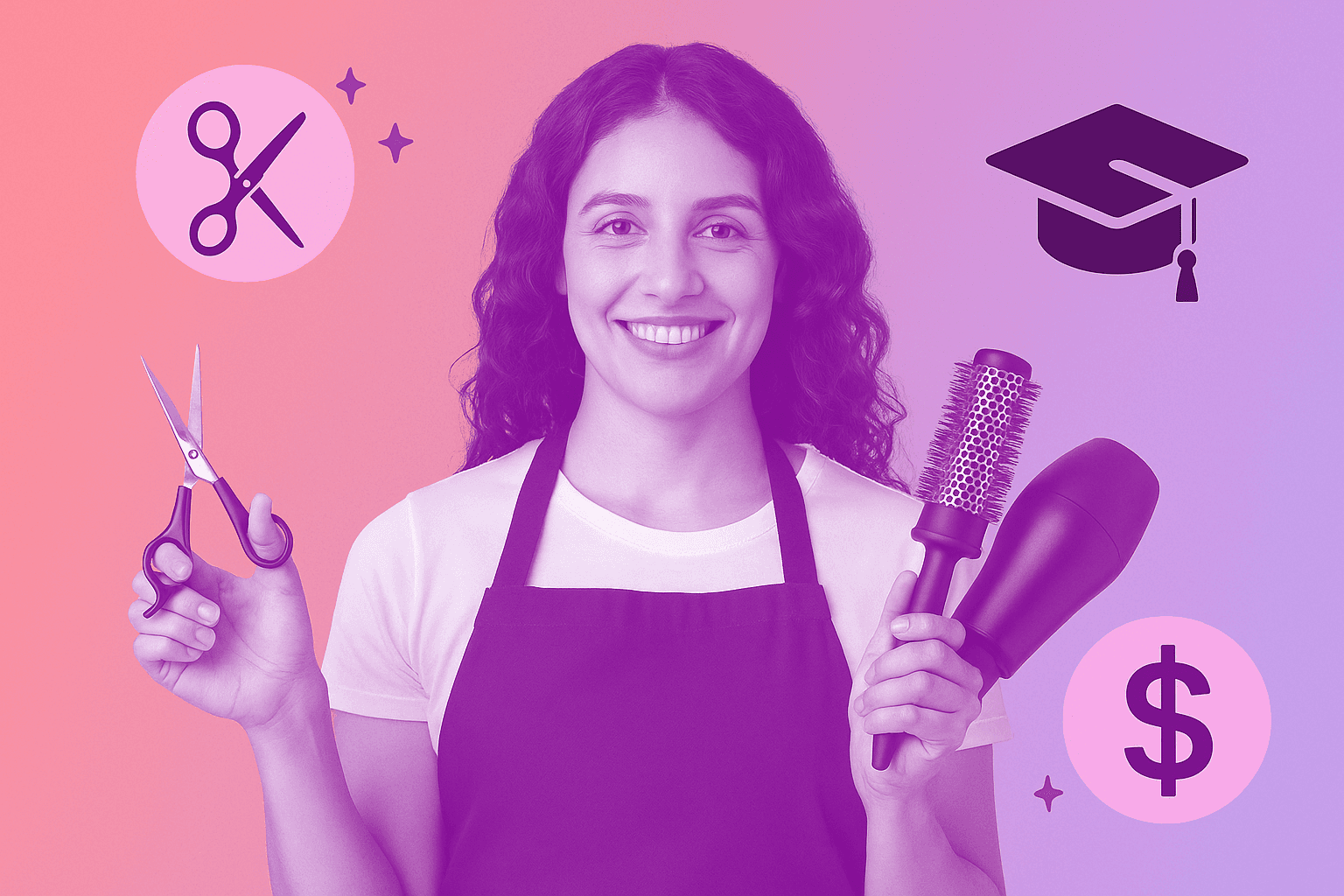
The beauty industry is booming online, and hair styling courses are some of the most in-demand digital products creators are selling right now.
The beauty industry is booming online, and hair styling courses are some of the most in-demand digital products creators are selling right now. Whether you’re a licensed cosmetologist, self-taught styling expert, or salon owner, your knowledge is worth serious money in the digital education space.
Ready to turn your hair expertise into a profitable online course? Try Teachery for 14 days free and see how easy it is to build a beautiful course site.
Key Facts
Market demand - Hair styling tutorials generate over 2.8 billion views annually on YouTube alone
Course pricing - Professional hair styling courses sell for $97-$497, with premium mentorship packages reaching $997-$2,997
Platform costs - Teachery charges 0% transaction fees on all plans, while Teachable charges 5% on its Basic plan
Success rate - 73% of beauty course creators report making their first $1,000 within 90 days of launch
Why Hair Styling Is Perfect for Online Courses
Hair styling translates beautifully to digital education for several specific reasons that make it one of the most profitable niches in online course creation.
Visual learning works perfectly for hair techniques. Hair styling is inherently visual. Students can watch you demonstrate a French braid, see exactly how you section hair for layers, or follow along as you create beach waves. Unlike abstract concepts that require lengthy explanations, hair styling shows immediate, tangible results.
High repeat engagement and lifetime value. Hair grows. Styles change. Seasons shift. Your students will come back to your content repeatedly, making them incredibly valuable. A student might learn your everyday blowout technique, then return months later for your holiday updo module, then again for your summer braiding series.
Universal appeal across demographics. Everyone has hair (or wants better hair). Your potential audience spans teenagers learning their first styling techniques to busy moms wanting 5-minute morning routines to professionals looking to expand their skill sets. This broad appeal means larger audiences and more marketing opportunities.
Low barrier to entry for students. Unlike courses requiring expensive equipment or software, hair styling courses need basic tools most people already own - brushes, hair ties, maybe a curling iron. Students can start practicing immediately without additional investment, leading to higher completion rates and better reviews.
Natural progression and upselling opportunities. You can start with a basic “Hair Styling Fundamentals” course, then offer advanced courses on specific techniques (wedding updos, curly hair care, men’s styling), seasonal collections, or even business courses for aspiring stylists. One successful course creator we know started with a $47 braiding course and now has a $30,000/month course business.
What to Include in Your Hair Styling Course
Your course structure should take students from basic concepts to confident execution. Here are 6-8 modules that create a comprehensive learning experience:
Module 1: Hair Basics and Foundation
Cover hair types, textures, and how different techniques work on different hair. Include a hair assessment guide so students can identify their specific hair needs. This foundation prevents frustration later when techniques don’t work as expected.
Module 2: Essential Tools and Products
Break down must-have tools versus nice-to-have extras. Include budget-friendly alternatives and explain when to invest in higher-quality tools. Students love specific product recommendations with links to purchase.
Module 3: Everyday Styling Techniques
Focus on 5-10 styles students will actually use regularly. Think sleek ponytails, simple waves, quick updos for work, and effortless second-day hair. These become the techniques students practice most.
Module 4: Special Occasion Styling
Cover more elaborate techniques for events, dates, or when students want to feel extra polished. Include troubleshooting tips for when styles fall flat or don’t hold.
Module 5: Problem-Solving and Hair Challenges
Address common frustrations: flat hair, frizz control, styles that won’t hold, working with short hair, or styling while growing out a cut. This module often gets the most engagement because it solves real daily problems.
Module 6: Hair Care and Maintenance
Include washing schedules, product application techniques, heat protection, and how to maintain hair health while styling frequently. Students appreciate learning the “why” behind recommendations.
Module 7: Advanced Techniques (Optional)
For comprehensive courses, add complex braids, advanced curling patterns, or vintage-inspired styles. This gives ambitious students something to work toward.
Module 8: Quick Reference and Troubleshooting
Create downloadable guides, quick video refreshers for each technique, and a FAQ addressing common student questions. This becomes your most-referenced module.
How to Price Your Hair Styling Course
Hair styling course pricing varies significantly based on depth, delivery method, and your expertise level. Here’s what works in 2026:
Basic Self-Paced Courses: $47-$97
Perfect for focused courses teaching 3-5 specific techniques. Example: “5 Quick Morning Hairstyles” or “Mastering the Perfect Blowout.” These shorter courses attract price-sensitive students and work well as entry points to your brand.
Comprehensive Styling Courses: $97-$297
Your main course offering should fall in this range. Include 20-40 video lessons, downloadable guides, and lifetime access. This price point feels accessible while positioning your course as premium content worth investing in.
Premium Courses with Bonuses: $297-$497
Add live Q&A sessions, private Facebook groups, or bonus modules on hair business basics. The $297-$497 range works when you include significant community or mentorship elements.
High-Touch Coaching Programs: $997-$2,997
For aspiring professional stylists or salon owners, combine your course with 1-on-1 coaching, business training, or certification programs. Only price this high if you’re providing direct access to you and proven business results.
Pricing strategy tip: Start with one comprehensive course at $197, then create lower-priced mini-courses ($47-$67) that introduce people to your teaching style. Many successful course creators see mini-courses convert to their main course at a 15-20% rate.
Consider your background when pricing. Licensed cosmetologists can typically charge 20-30% more than self-taught experts, and stylists with social media followings or celebrity clients can command premium prices from day one.
How to Find Students and Sell Your Hair Styling Course
Hair styling has built-in marketing advantages, but you need to be strategic about where and how you find your ideal students.
Instagram and TikTok Content Marketing
These platforms were made for hair content. Post time-lapse styling videos, before-and-after transformations, and quick tips. The key is consistency - post 3-4 times per week and use trending audio with your videos. Tag your location to attract local clients, and use hashtags like #hairtutorial, #hairstyling, and #hairhacks. One course creator we know grew from 500 to 50,000 followers in 8 months by posting daily quick styling tips.
YouTube Long-Form Tutorials
Create 10-15 minute tutorials for specific techniques, but only show 70% of the process. End with “for the complete step-by-step process and troubleshooting tips, check out my full course.” YouTube’s algorithm favors beauty content, and hair tutorials consistently get high watch times. Many successful course creators report YouTube as their #1 traffic source.
Local Partnerships and Workshops
Partner with local salons, beauty supply stores, or community centers to offer mini-workshops. These work incredibly well for building email lists and establishing local authority. Charge $20-$30 for a 2-hour workshop, collect emails, then follow up with course offers. Even small workshops of 8-12 people can generate $2,000-$5,000 in course sales within 30 days.
Pinterest for Inspiration and Discovery
Pinterest is the secret weapon most hair stylists ignore. Create boards for different hair lengths, textures, and occasions. Pin high-quality photos of your work with keyword-rich descriptions. Pinterest drives consistent traffic for months or years after posting, unlike social media that disappears quickly.
The most successful approach combines all four strategies. Start with Instagram or TikTok for immediate engagement, build your YouTube presence for long-term discovery, use Pinterest for passive traffic, and test local workshops for high-conversion sales experiences.
Choosing the Right Platform for Your Hair Styling Course
Your course platform needs to handle video beautifully, give you design control, and not eat your profits with high fees. Most hair styling courses are heavily visual, so your platform choice matters more than it would for text-based courses.
We’ve seen too many beauty course creators get frustrated with platforms that make their content look generic or charge hefty transaction fees on every sale. When you’re selling courses at $97-$297, a 5% transaction fee (like Teachable charges on its Basic plan) adds up quickly.
Teachery works particularly well for hair styling courses because you get complete design control - your course site can match your brand colors, fonts, and aesthetic exactly. Plus, Teachery charges 0% transaction fees on all plans, so you keep more of what you earn.
The design customization matters more in the beauty space than almost anywhere else. Your students are visual learners who care about aesthetics. A beautiful, professional-looking course site builds trust before students even watch your first video.
For hair stylists just starting out, Teachery’s Lifetime Deal at $950 makes particular sense. Instead of paying $49-$99+ every month to other platforms, you own your course platform forever. Over two years, that Lifetime Deal saves you $600-$1,800 compared to monthly plans.
If you’re comparing platforms, check out our guides on Kajabi alternatives, Gumroad alternatives for courses, and ClickFunnels alternatives to see how different platforms stack up for course creators.
Getting Started: Your First Hair Styling Course
Start simple, but start now. The biggest mistake we see hair stylists make is waiting until they have 50 perfect video lessons planned. Your first course should solve one specific problem really well.
Pick your easiest, most popular technique - the one friends always ask you to teach them. Create a 4-6 lesson course around that single skill. Film it with your phone (good lighting matters more than camera quality), and price it at $47-$67.
This approach lets you test your teaching style, gather student feedback, and start building an email list without the pressure of creating a massive course that might not sell.
Many successful hair course creators started exactly this way. They built trust with a simple, valuable course, then expanded into comprehensive programs once they understood what their students really wanted to learn.
The beauty industry needs more quality online education. Your expertise - whether it’s effortless beach waves, protective styling for natural hair, or quick styles for busy mornings - can genuinely help people feel more confident and save time in their daily routines.
Ready to turn your hair styling expertise into a profitable online course? Start your free Teachery trial and see how easy it is to build a beautiful, professional course site that showcases your skills and attracts paying students.
Related Reading
Frequently Asked Questions
How much can you make selling a hair styling course online?
Hair styling course creators typically earn $2,000-$15,000 per month once established, with top creators making $50,000+ monthly. Your earnings depend on course pricing ($47-$497 is common), audience size, and marketing consistency. Most successful creators start with a $97-$197 main course and build multiple revenue streams from there.
What equipment do I need to create a hair styling course?
You need a decent camera (smartphone works fine), good lighting setup, tripod for steady shots, and basic hair tools for demonstrations. Total startup cost is typically $200-$500. Focus your budget on lighting - it makes a bigger difference than expensive cameras for beauty content.
Do I need a cosmetology license to sell hair styling courses online?
No cosmetology license is required to sell hair styling courses online in most jurisdictions. You’re teaching techniques, not providing professional salon services. However, check your local regulations and avoid medical claims or chemical processing instruction without proper credentials.
Which platform is best for selling hair styling courses?
Teachery works exceptionally well for beauty courses because it offers complete design customization and charges 0% transaction fees. Other platforms like Teachable charge 5% fees on basic plans, which reduces your profits significantly. The visual customization is crucial for beauty brands where aesthetics matter to your audience.
The beauty industry is booming online, and hair styling courses are some of the most in-demand digital products creators are selling right now. Whether you’re a licensed cosmetologist, self-taught styling expert, or salon owner, your knowledge is worth serious money in the digital education space.
Ready to turn your hair expertise into a profitable online course? Try Teachery for 14 days free and see how easy it is to build a beautiful course site.
Key Facts
Market demand - Hair styling tutorials generate over 2.8 billion views annually on YouTube alone
Course pricing - Professional hair styling courses sell for $97-$497, with premium mentorship packages reaching $997-$2,997
Platform costs - Teachery charges 0% transaction fees on all plans, while Teachable charges 5% on its Basic plan
Success rate - 73% of beauty course creators report making their first $1,000 within 90 days of launch
Why Hair Styling Is Perfect for Online Courses
Hair styling translates beautifully to digital education for several specific reasons that make it one of the most profitable niches in online course creation.
Visual learning works perfectly for hair techniques. Hair styling is inherently visual. Students can watch you demonstrate a French braid, see exactly how you section hair for layers, or follow along as you create beach waves. Unlike abstract concepts that require lengthy explanations, hair styling shows immediate, tangible results.
High repeat engagement and lifetime value. Hair grows. Styles change. Seasons shift. Your students will come back to your content repeatedly, making them incredibly valuable. A student might learn your everyday blowout technique, then return months later for your holiday updo module, then again for your summer braiding series.
Universal appeal across demographics. Everyone has hair (or wants better hair). Your potential audience spans teenagers learning their first styling techniques to busy moms wanting 5-minute morning routines to professionals looking to expand their skill sets. This broad appeal means larger audiences and more marketing opportunities.
Low barrier to entry for students. Unlike courses requiring expensive equipment or software, hair styling courses need basic tools most people already own - brushes, hair ties, maybe a curling iron. Students can start practicing immediately without additional investment, leading to higher completion rates and better reviews.
Natural progression and upselling opportunities. You can start with a basic “Hair Styling Fundamentals” course, then offer advanced courses on specific techniques (wedding updos, curly hair care, men’s styling), seasonal collections, or even business courses for aspiring stylists. One successful course creator we know started with a $47 braiding course and now has a $30,000/month course business.
What to Include in Your Hair Styling Course
Your course structure should take students from basic concepts to confident execution. Here are 6-8 modules that create a comprehensive learning experience:
Module 1: Hair Basics and Foundation
Cover hair types, textures, and how different techniques work on different hair. Include a hair assessment guide so students can identify their specific hair needs. This foundation prevents frustration later when techniques don’t work as expected.
Module 2: Essential Tools and Products
Break down must-have tools versus nice-to-have extras. Include budget-friendly alternatives and explain when to invest in higher-quality tools. Students love specific product recommendations with links to purchase.
Module 3: Everyday Styling Techniques
Focus on 5-10 styles students will actually use regularly. Think sleek ponytails, simple waves, quick updos for work, and effortless second-day hair. These become the techniques students practice most.
Module 4: Special Occasion Styling
Cover more elaborate techniques for events, dates, or when students want to feel extra polished. Include troubleshooting tips for when styles fall flat or don’t hold.
Module 5: Problem-Solving and Hair Challenges
Address common frustrations: flat hair, frizz control, styles that won’t hold, working with short hair, or styling while growing out a cut. This module often gets the most engagement because it solves real daily problems.
Module 6: Hair Care and Maintenance
Include washing schedules, product application techniques, heat protection, and how to maintain hair health while styling frequently. Students appreciate learning the “why” behind recommendations.
Module 7: Advanced Techniques (Optional)
For comprehensive courses, add complex braids, advanced curling patterns, or vintage-inspired styles. This gives ambitious students something to work toward.
Module 8: Quick Reference and Troubleshooting
Create downloadable guides, quick video refreshers for each technique, and a FAQ addressing common student questions. This becomes your most-referenced module.
How to Price Your Hair Styling Course
Hair styling course pricing varies significantly based on depth, delivery method, and your expertise level. Here’s what works in 2026:
Basic Self-Paced Courses: $47-$97
Perfect for focused courses teaching 3-5 specific techniques. Example: “5 Quick Morning Hairstyles” or “Mastering the Perfect Blowout.” These shorter courses attract price-sensitive students and work well as entry points to your brand.
Comprehensive Styling Courses: $97-$297
Your main course offering should fall in this range. Include 20-40 video lessons, downloadable guides, and lifetime access. This price point feels accessible while positioning your course as premium content worth investing in.
Premium Courses with Bonuses: $297-$497
Add live Q&A sessions, private Facebook groups, or bonus modules on hair business basics. The $297-$497 range works when you include significant community or mentorship elements.
High-Touch Coaching Programs: $997-$2,997
For aspiring professional stylists or salon owners, combine your course with 1-on-1 coaching, business training, or certification programs. Only price this high if you’re providing direct access to you and proven business results.
Pricing strategy tip: Start with one comprehensive course at $197, then create lower-priced mini-courses ($47-$67) that introduce people to your teaching style. Many successful course creators see mini-courses convert to their main course at a 15-20% rate.
Consider your background when pricing. Licensed cosmetologists can typically charge 20-30% more than self-taught experts, and stylists with social media followings or celebrity clients can command premium prices from day one.
How to Find Students and Sell Your Hair Styling Course
Hair styling has built-in marketing advantages, but you need to be strategic about where and how you find your ideal students.
Instagram and TikTok Content Marketing
These platforms were made for hair content. Post time-lapse styling videos, before-and-after transformations, and quick tips. The key is consistency - post 3-4 times per week and use trending audio with your videos. Tag your location to attract local clients, and use hashtags like #hairtutorial, #hairstyling, and #hairhacks. One course creator we know grew from 500 to 50,000 followers in 8 months by posting daily quick styling tips.
YouTube Long-Form Tutorials
Create 10-15 minute tutorials for specific techniques, but only show 70% of the process. End with “for the complete step-by-step process and troubleshooting tips, check out my full course.” YouTube’s algorithm favors beauty content, and hair tutorials consistently get high watch times. Many successful course creators report YouTube as their #1 traffic source.
Local Partnerships and Workshops
Partner with local salons, beauty supply stores, or community centers to offer mini-workshops. These work incredibly well for building email lists and establishing local authority. Charge $20-$30 for a 2-hour workshop, collect emails, then follow up with course offers. Even small workshops of 8-12 people can generate $2,000-$5,000 in course sales within 30 days.
Pinterest for Inspiration and Discovery
Pinterest is the secret weapon most hair stylists ignore. Create boards for different hair lengths, textures, and occasions. Pin high-quality photos of your work with keyword-rich descriptions. Pinterest drives consistent traffic for months or years after posting, unlike social media that disappears quickly.
The most successful approach combines all four strategies. Start with Instagram or TikTok for immediate engagement, build your YouTube presence for long-term discovery, use Pinterest for passive traffic, and test local workshops for high-conversion sales experiences.
Choosing the Right Platform for Your Hair Styling Course
Your course platform needs to handle video beautifully, give you design control, and not eat your profits with high fees. Most hair styling courses are heavily visual, so your platform choice matters more than it would for text-based courses.
We’ve seen too many beauty course creators get frustrated with platforms that make their content look generic or charge hefty transaction fees on every sale. When you’re selling courses at $97-$297, a 5% transaction fee (like Teachable charges on its Basic plan) adds up quickly.
Teachery works particularly well for hair styling courses because you get complete design control - your course site can match your brand colors, fonts, and aesthetic exactly. Plus, Teachery charges 0% transaction fees on all plans, so you keep more of what you earn.
The design customization matters more in the beauty space than almost anywhere else. Your students are visual learners who care about aesthetics. A beautiful, professional-looking course site builds trust before students even watch your first video.
For hair stylists just starting out, Teachery’s Lifetime Deal at $950 makes particular sense. Instead of paying $49-$99+ every month to other platforms, you own your course platform forever. Over two years, that Lifetime Deal saves you $600-$1,800 compared to monthly plans.
If you’re comparing platforms, check out our guides on Kajabi alternatives, Gumroad alternatives for courses, and ClickFunnels alternatives to see how different platforms stack up for course creators.
Getting Started: Your First Hair Styling Course
Start simple, but start now. The biggest mistake we see hair stylists make is waiting until they have 50 perfect video lessons planned. Your first course should solve one specific problem really well.
Pick your easiest, most popular technique - the one friends always ask you to teach them. Create a 4-6 lesson course around that single skill. Film it with your phone (good lighting matters more than camera quality), and price it at $47-$67.
This approach lets you test your teaching style, gather student feedback, and start building an email list without the pressure of creating a massive course that might not sell.
Many successful hair course creators started exactly this way. They built trust with a simple, valuable course, then expanded into comprehensive programs once they understood what their students really wanted to learn.
The beauty industry needs more quality online education. Your expertise - whether it’s effortless beach waves, protective styling for natural hair, or quick styles for busy mornings - can genuinely help people feel more confident and save time in their daily routines.
Ready to turn your hair styling expertise into a profitable online course? Start your free Teachery trial and see how easy it is to build a beautiful, professional course site that showcases your skills and attracts paying students.
Related Reading
Frequently Asked Questions
How much can you make selling a hair styling course online?
Hair styling course creators typically earn $2,000-$15,000 per month once established, with top creators making $50,000+ monthly. Your earnings depend on course pricing ($47-$497 is common), audience size, and marketing consistency. Most successful creators start with a $97-$197 main course and build multiple revenue streams from there.
What equipment do I need to create a hair styling course?
You need a decent camera (smartphone works fine), good lighting setup, tripod for steady shots, and basic hair tools for demonstrations. Total startup cost is typically $200-$500. Focus your budget on lighting - it makes a bigger difference than expensive cameras for beauty content.
Do I need a cosmetology license to sell hair styling courses online?
No cosmetology license is required to sell hair styling courses online in most jurisdictions. You’re teaching techniques, not providing professional salon services. However, check your local regulations and avoid medical claims or chemical processing instruction without proper credentials.
Which platform is best for selling hair styling courses?
Teachery works exceptionally well for beauty courses because it offers complete design customization and charges 0% transaction fees. Other platforms like Teachable charge 5% fees on basic plans, which reduces your profits significantly. The visual customization is crucial for beauty brands where aesthetics matter to your audience.