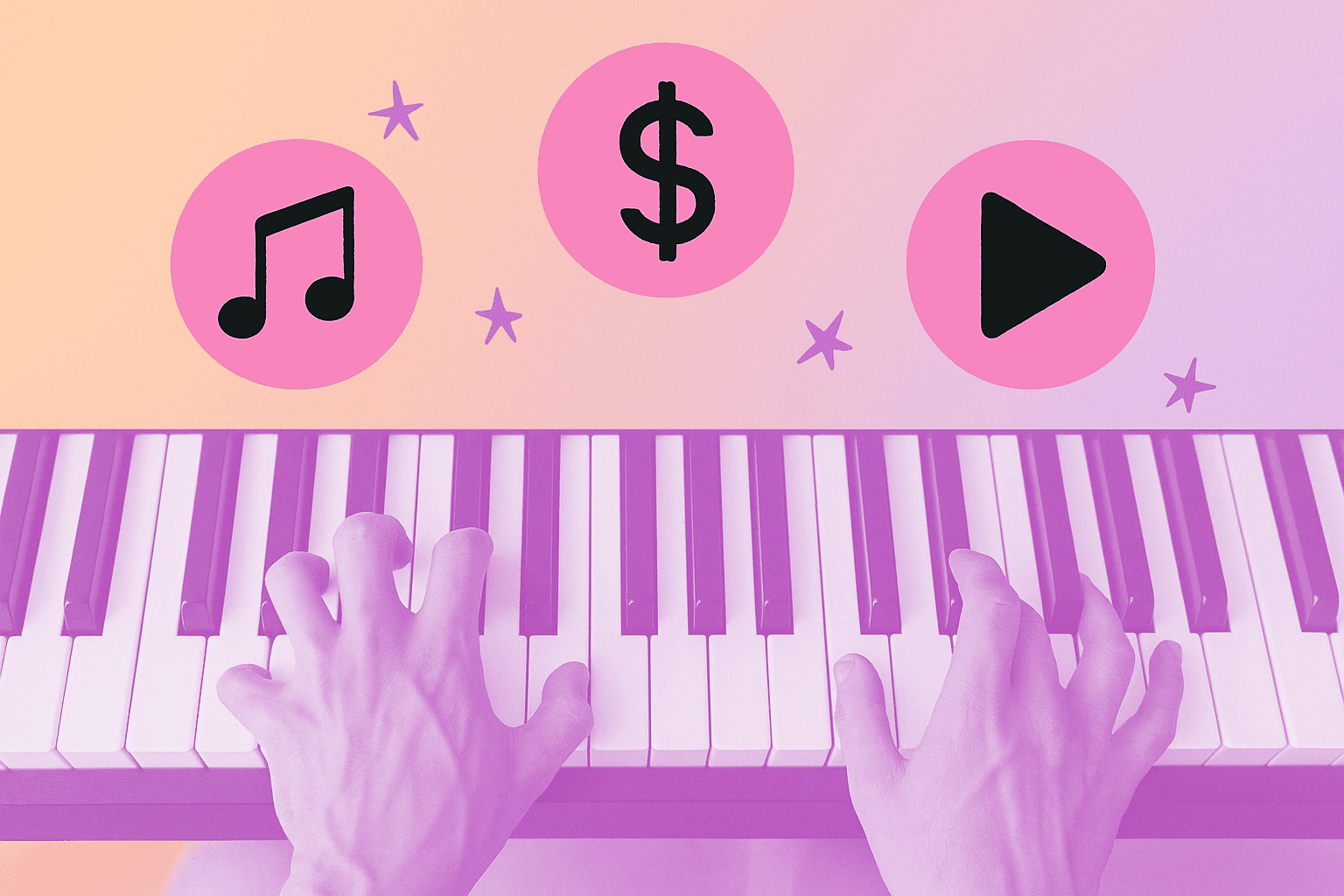
Piano teachers are sitting on a goldmine - you have skills that millions want to learn, and online courses let you teach far more students than ever possible in person.
Piano teachers are sitting on a goldmine. You have skills that millions of people desperately want to learn, and online courses let you teach far more students than you ever could in person.
Here’s the thing - piano translates incredibly well to digital learning. Unlike instruments that require precise fingering feedback or breath control, piano students can see your hand positions clearly on screen and practice along with video lessons. We’ve seen piano teachers go from struggling with a few local students to earning six figures teaching hundreds of students worldwide.
Key Facts
Piano courses can command premium pricing - beginner courses typically sell for $97-$297, while advanced technique courses can reach $497-$997
Visual learning advantage - 89% of piano students learn better through video demonstration than audio-only instruction
Market size opportunity - over 21 million Americans play piano, with 73% interested in online learning options
Platform costs matter - Teachery charges 0% transaction fees on all plans, while Teachable charges 5% on its Basic plan
Ready to turn your piano expertise into a thriving online business? Try Teachery free and see how easy it is to build a beautiful course site that matches your teaching style.
Why Piano Is Perfect for Online Courses
Piano has unique advantages that make it ideal for digital learning. Let’s break down why piano courses succeed where other music courses struggle.
Visual Learning Works Incredibly Well
Piano is fundamentally visual. Students can see exactly where your fingers go on the keys, watch your hand positions, and follow along in real-time. Compare this to violin, where bow angle and finger pressure are nearly impossible to demonstrate clearly on camera.
We’ve watched piano teachers record simple iPhone videos of their hands playing scales and get better student results than expensive multi-camera setups for other instruments.
Students Can Practice Immediately
Your students don’t need perfect acoustics or worry about disturbing neighbors. Most have access to a piano, keyboard, or can use piano apps on their devices. This removes the biggest barrier to practice - accessibility.
Real talk: guitar students often quit because their fingers hurt. Vocal students get discouraged when they can’t hit notes. Piano students can play simple songs within their first few lessons and feel immediate progress.
Scalable Teaching Methods
Piano instruction follows logical progressions that work well in course format. You can structure modules around specific skills (reading music, chord progressions, specific pieces) and students can work through them at their own pace.
Unlike one-on-one lessons where you’re constantly adjusting to individual student needs, online piano courses let you create one excellent explanation of a concept that works for hundreds of students.
What to Include in Your Piano Course
Here’s a proven framework for structuring piano courses that actually get results. These modules work whether you’re teaching absolute beginners or advanced techniques.
Module 1: Piano Fundamentals and Posture
Start with proper sitting position, hand shape, and finger placement. This isn’t boring - it prevents injury and makes everything else easier. Include close-up videos of correct vs. incorrect hand positions.
Cover basic music notation, the layout of keys, and how to count beats. Give students simple exercises they can practice immediately.
Module 2: First Songs and Reading Music
Teach 3-5 simple songs using only white keys. ‘Mary Had a Little Lamb’ and ‘Twinkle Twinkle Little Star’ work because students already know the melodies.
Introduce treble clef reading gradually. Don’t dump the entire staff on them at once - start with just the lines or just the spaces.
Module 3: Rhythm and Timing
This is where many piano courses fail. Students can find the right notes but can’t play them in time. Include metronome exercises and counting methods.
Teach simple time signatures (4/4, 3/4) with songs students recognize. Use backing tracks or play-along exercises to make rhythm practice enjoyable.
Module 4: Basic Chords and Harmony
Start with major triads in C, F, and G. These three chords unlock hundreds of popular songs. Show students how to play simple chord progressions with their left hand while playing melodies with their right.
Include chord charts and teach students how to read chord symbols (C, F, G7, etc.).
Module 5: Popular Song Applications
This is where your course gets exciting. Take current popular songs and break them down into manageable pieces. Teach simplified versions that sound recognizable but aren’t overwhelming.
Include both classical pieces and contemporary music. Students want to play songs they actually know and enjoy.
Module 6: Technique Development
Cover scales, arpeggios, and finger exercises. Make these musical, not mechanical. Explain how technique exercises directly improve the songs they’re learning.
Show students how to practice efficiently - most beginners practice wrong and build bad habits.
Module 7: Performance and Expression
Teach dynamics (loud and soft playing), pedaling techniques, and how to add emotion to their playing. Include guidance on overcoming performance anxiety.
Give students a framework for learning new songs independently after your course ends.
How to Price Your Piano Course
Piano course pricing depends on your target audience and what you include. Here’s what we’ve seen work consistently:
Beginner Self-Paced Courses: $97-$197
This price range works for complete beginners learning basic skills. Your course should include 6-10 hours of video content, downloadable sheet music, and practice exercises.
At $97, you’re competing with YouTube (free) and cheap Udemy courses ($20-50). At $197, you’re positioning as premium but accessible. Price at $147 if you want the sweet spot.
Intermediate Skill-Specific Courses: $197-$397
These courses teach specific skills like jazz piano, classical technique, or songwriting. Students already play piano and want to improve particular areas.
Higher prices work here because your audience has proven they’ll invest in piano education. They’ve likely already spent money on lessons or instruments.
Premium Courses with Coaching: $497-$997
Include live group calls, personalized feedback on video submissions, or one-on-one coaching sessions. This pricing requires significant personal involvement from you.
We’ve seen piano teachers successfully charge $797 for courses that include monthly group calls where students can play for the group and get feedback.
Avoid These Pricing Mistakes
Don’t price based on hours of content. Students care about results, not video length. A 2-hour course that teaches someone to play their favorite song is worth more than 20 hours of theory they’ll never use.
Don’t start too low thinking you’ll raise prices later. It’s much harder to increase prices than to launch at the right price from the beginning.
How to Find Students and Sell Your Course
Marketing piano courses requires different strategies than generic online course marketing. Here’s what works specifically for music education.
YouTube Channel with Lesson Previews
This is the most effective long-term strategy we’ve seen. Create weekly videos teaching simplified versions of popular songs. End each video with ‘If you want to learn the complete arrangement with proper fingering and technique, check out my full course.’
Focus on trending songs and seasonal music (Christmas carols in December, wedding songs in spring). These videos can get discovered years later and continue driving course sales.
Partner with Music Stores and Piano Teachers
Local music stores often get asked for lesson recommendations. Many piano teachers are booked solid and turn away students. Offer them affiliate commissions for referrals to your online course.
Create a simple referral program - give existing piano teachers 25-30% commission for every student they send your way. This works especially well for teachers who can’t take more students but don’t want to turn people away completely.
Facebook and Instagram Ads to Piano-Playing Parents
Target parents ages 35-50 whose kids show interest in music. Many want their children to learn piano but can’t afford $80/week for private lessons.
Your ad copy should focus on convenience and cost savings: ‘Give your child professional piano lessons at home for less than the cost of one private lesson.’
Content Marketing Through Piano Communities
Join Facebook groups, Reddit communities (r/piano has 200k+ members), and piano forums. Don’t spam - genuinely help people with questions and occasionally mention your course when relevant.
Write guest posts for music blogs about piano learning tips. Include a brief bio mentioning your course but focus on providing real value in the article itself.
Technical Setup for Piano Courses
Recording piano courses requires specific technical considerations that other course creators don’t face.
Camera Positioning
You need at least two camera angles - one showing your hands/keyboard and one showing your face for explanations. Many successful piano teachers use just an iPhone positioned to show both hands clearly on the keys.
Avoid overhead shots unless you have professional equipment. Students need to see hand positions from the same angle they see their own hands while playing.
Audio Quality Matters More Than Video
Piano courses live or die on audio quality. Students need to hear the subtle differences between proper and improper technique. Invest in a decent microphone even if your camera is basic.
Record in a room with minimal echo. Hardwood floors and bare walls make piano sound harsh on recordings.
Sheet Music and Visual Aids
Create downloadable PDF sheet music for every song you teach. Students want to print these out and write notes on them. Include both standard notation and chord charts when relevant.
Consider creating simple diagrams showing hand positions for complex passages. These work better than trying to explain everything verbally.
Choosing the Right Platform for Your Piano Course
Your course platform needs to handle video well, look professional, and not eat up your profits with high fees.
We’ve seen too many piano teachers lose money because their platform charged high transaction fees or forced them into generic, unprofessional-looking course sites. Your course platform should enhance your teaching, not detract from it.
Teachery works particularly well for music teachers because you get complete design control. You can match your course site to your existing website, choose custom colors that feel musical and professional, and upload your own fonts for a cohesive brand experience.
Here’s what matters most: Teachery charges 0% transaction fees on all plans and offers a Lifetime Deal for $950 - pay once, own it forever. When you’re charging $197-$497 per course, transaction fees add up quickly.
The platform also handles unlimited students, unlimited courses, and gives you complete control over your course design. Piano teachers especially appreciate being able to embed their YouTube videos directly into course modules and customize their checkout pages to match their brand.
Common Piano Course Mistakes to Avoid
Don’t Overwhelm Beginners with Theory
Students want to play songs, not memorize circle of fifths diagrams. Teach theory gradually and always connect it to songs they’re learning.
Don’t Ignore Different Learning Styles
Some students learn better with chord charts, others need standard notation. Include both whenever possible, or create separate tracks for different learning preferences.
Similar to what we’ve seen work well for yoga teachers and therapists, piano instructors need platforms that let them customize the learning experience for different student needs.
Don’t Skip the Business Basics
Set up proper payment processing, create clear refund policies, and have a plan for student support. Use free tools that course creators actually need to handle the business side professionally.
Consider how other course creators in different niches handle similar challenges - there are lessons from real estate course creators about building credibility and demonstrating expertise that apply to music instruction too.
Scaling Your Piano Course Business
Once your first course succeeds, you have several options for growth:
Create advanced courses for your existing students. Piano students who complete a beginner course often want intermediate and advanced training.
Develop specialized courses for different genres - jazz piano, classical technique, contemporary worship, or specific artist styles.
Add group coaching or live monthly sessions where students can get personalized feedback.
Partner with other music teachers to create comprehensive music education packages.
The key is building on your initial success rather than starting from scratch with each new course. Your first students become your best marketing asset if you deliver real results.
If you’re considering alternatives to traditional course platforms, check out this comparison of Gumroad alternatives to understand why course-specific platforms work better for educational content than general digital product platforms.
Related Reading
Frequently Asked Questions
How much can I realistically charge for a piano course online?
Beginner piano courses typically sell for $97-$197, while specialized or advanced courses can command $297-$497. Courses with personal coaching or live elements often price at $497-$997. Your pricing should reflect the transformation you provide, not just the hours of content.
What equipment do I need to create a professional piano course?
You need a camera positioned to show your hands clearly on the keyboard, good audio recording equipment, and basic video editing software. Many successful piano teachers start with just a smartphone and upgrade equipment as their course revenue grows.
How long should my piano course be?
Focus on outcomes rather than length, but most successful beginner piano courses include 6-10 hours of video content spread across 6-8 modules. Students prefer shorter, focused lessons they can complete in 15-20 minute sessions rather than hour-long videos.
Which platform works best for selling piano courses?
Look for platforms that offer design customization, handle video content well, and don’t charge high transaction fees. Teachery is popular among music teachers because it charges 0% transaction fees, offers unlimited hosting, and provides complete design control to create professional-looking course sites.
Ready to transform your piano teaching into a profitable online course? Start your free Teachery trial and see how easy it is to build a course site that showcases your musical expertise and attracts students who are excited to learn from you.
Piano teachers are sitting on a goldmine. You have skills that millions of people desperately want to learn, and online courses let you teach far more students than you ever could in person.
Here’s the thing - piano translates incredibly well to digital learning. Unlike instruments that require precise fingering feedback or breath control, piano students can see your hand positions clearly on screen and practice along with video lessons. We’ve seen piano teachers go from struggling with a few local students to earning six figures teaching hundreds of students worldwide.
Key Facts
Piano courses can command premium pricing - beginner courses typically sell for $97-$297, while advanced technique courses can reach $497-$997
Visual learning advantage - 89% of piano students learn better through video demonstration than audio-only instruction
Market size opportunity - over 21 million Americans play piano, with 73% interested in online learning options
Platform costs matter - Teachery charges 0% transaction fees on all plans, while Teachable charges 5% on its Basic plan
Ready to turn your piano expertise into a thriving online business? Try Teachery free and see how easy it is to build a beautiful course site that matches your teaching style.
Why Piano Is Perfect for Online Courses
Piano has unique advantages that make it ideal for digital learning. Let’s break down why piano courses succeed where other music courses struggle.
Visual Learning Works Incredibly Well
Piano is fundamentally visual. Students can see exactly where your fingers go on the keys, watch your hand positions, and follow along in real-time. Compare this to violin, where bow angle and finger pressure are nearly impossible to demonstrate clearly on camera.
We’ve watched piano teachers record simple iPhone videos of their hands playing scales and get better student results than expensive multi-camera setups for other instruments.
Students Can Practice Immediately
Your students don’t need perfect acoustics or worry about disturbing neighbors. Most have access to a piano, keyboard, or can use piano apps on their devices. This removes the biggest barrier to practice - accessibility.
Real talk: guitar students often quit because their fingers hurt. Vocal students get discouraged when they can’t hit notes. Piano students can play simple songs within their first few lessons and feel immediate progress.
Scalable Teaching Methods
Piano instruction follows logical progressions that work well in course format. You can structure modules around specific skills (reading music, chord progressions, specific pieces) and students can work through them at their own pace.
Unlike one-on-one lessons where you’re constantly adjusting to individual student needs, online piano courses let you create one excellent explanation of a concept that works for hundreds of students.
What to Include in Your Piano Course
Here’s a proven framework for structuring piano courses that actually get results. These modules work whether you’re teaching absolute beginners or advanced techniques.
Module 1: Piano Fundamentals and Posture
Start with proper sitting position, hand shape, and finger placement. This isn’t boring - it prevents injury and makes everything else easier. Include close-up videos of correct vs. incorrect hand positions.
Cover basic music notation, the layout of keys, and how to count beats. Give students simple exercises they can practice immediately.
Module 2: First Songs and Reading Music
Teach 3-5 simple songs using only white keys. ‘Mary Had a Little Lamb’ and ‘Twinkle Twinkle Little Star’ work because students already know the melodies.
Introduce treble clef reading gradually. Don’t dump the entire staff on them at once - start with just the lines or just the spaces.
Module 3: Rhythm and Timing
This is where many piano courses fail. Students can find the right notes but can’t play them in time. Include metronome exercises and counting methods.
Teach simple time signatures (4/4, 3/4) with songs students recognize. Use backing tracks or play-along exercises to make rhythm practice enjoyable.
Module 4: Basic Chords and Harmony
Start with major triads in C, F, and G. These three chords unlock hundreds of popular songs. Show students how to play simple chord progressions with their left hand while playing melodies with their right.
Include chord charts and teach students how to read chord symbols (C, F, G7, etc.).
Module 5: Popular Song Applications
This is where your course gets exciting. Take current popular songs and break them down into manageable pieces. Teach simplified versions that sound recognizable but aren’t overwhelming.
Include both classical pieces and contemporary music. Students want to play songs they actually know and enjoy.
Module 6: Technique Development
Cover scales, arpeggios, and finger exercises. Make these musical, not mechanical. Explain how technique exercises directly improve the songs they’re learning.
Show students how to practice efficiently - most beginners practice wrong and build bad habits.
Module 7: Performance and Expression
Teach dynamics (loud and soft playing), pedaling techniques, and how to add emotion to their playing. Include guidance on overcoming performance anxiety.
Give students a framework for learning new songs independently after your course ends.
How to Price Your Piano Course
Piano course pricing depends on your target audience and what you include. Here’s what we’ve seen work consistently:
Beginner Self-Paced Courses: $97-$197
This price range works for complete beginners learning basic skills. Your course should include 6-10 hours of video content, downloadable sheet music, and practice exercises.
At $97, you’re competing with YouTube (free) and cheap Udemy courses ($20-50). At $197, you’re positioning as premium but accessible. Price at $147 if you want the sweet spot.
Intermediate Skill-Specific Courses: $197-$397
These courses teach specific skills like jazz piano, classical technique, or songwriting. Students already play piano and want to improve particular areas.
Higher prices work here because your audience has proven they’ll invest in piano education. They’ve likely already spent money on lessons or instruments.
Premium Courses with Coaching: $497-$997
Include live group calls, personalized feedback on video submissions, or one-on-one coaching sessions. This pricing requires significant personal involvement from you.
We’ve seen piano teachers successfully charge $797 for courses that include monthly group calls where students can play for the group and get feedback.
Avoid These Pricing Mistakes
Don’t price based on hours of content. Students care about results, not video length. A 2-hour course that teaches someone to play their favorite song is worth more than 20 hours of theory they’ll never use.
Don’t start too low thinking you’ll raise prices later. It’s much harder to increase prices than to launch at the right price from the beginning.
How to Find Students and Sell Your Course
Marketing piano courses requires different strategies than generic online course marketing. Here’s what works specifically for music education.
YouTube Channel with Lesson Previews
This is the most effective long-term strategy we’ve seen. Create weekly videos teaching simplified versions of popular songs. End each video with ‘If you want to learn the complete arrangement with proper fingering and technique, check out my full course.’
Focus on trending songs and seasonal music (Christmas carols in December, wedding songs in spring). These videos can get discovered years later and continue driving course sales.
Partner with Music Stores and Piano Teachers
Local music stores often get asked for lesson recommendations. Many piano teachers are booked solid and turn away students. Offer them affiliate commissions for referrals to your online course.
Create a simple referral program - give existing piano teachers 25-30% commission for every student they send your way. This works especially well for teachers who can’t take more students but don’t want to turn people away completely.
Facebook and Instagram Ads to Piano-Playing Parents
Target parents ages 35-50 whose kids show interest in music. Many want their children to learn piano but can’t afford $80/week for private lessons.
Your ad copy should focus on convenience and cost savings: ‘Give your child professional piano lessons at home for less than the cost of one private lesson.’
Content Marketing Through Piano Communities
Join Facebook groups, Reddit communities (r/piano has 200k+ members), and piano forums. Don’t spam - genuinely help people with questions and occasionally mention your course when relevant.
Write guest posts for music blogs about piano learning tips. Include a brief bio mentioning your course but focus on providing real value in the article itself.
Technical Setup for Piano Courses
Recording piano courses requires specific technical considerations that other course creators don’t face.
Camera Positioning
You need at least two camera angles - one showing your hands/keyboard and one showing your face for explanations. Many successful piano teachers use just an iPhone positioned to show both hands clearly on the keys.
Avoid overhead shots unless you have professional equipment. Students need to see hand positions from the same angle they see their own hands while playing.
Audio Quality Matters More Than Video
Piano courses live or die on audio quality. Students need to hear the subtle differences between proper and improper technique. Invest in a decent microphone even if your camera is basic.
Record in a room with minimal echo. Hardwood floors and bare walls make piano sound harsh on recordings.
Sheet Music and Visual Aids
Create downloadable PDF sheet music for every song you teach. Students want to print these out and write notes on them. Include both standard notation and chord charts when relevant.
Consider creating simple diagrams showing hand positions for complex passages. These work better than trying to explain everything verbally.
Choosing the Right Platform for Your Piano Course
Your course platform needs to handle video well, look professional, and not eat up your profits with high fees.
We’ve seen too many piano teachers lose money because their platform charged high transaction fees or forced them into generic, unprofessional-looking course sites. Your course platform should enhance your teaching, not detract from it.
Teachery works particularly well for music teachers because you get complete design control. You can match your course site to your existing website, choose custom colors that feel musical and professional, and upload your own fonts for a cohesive brand experience.
Here’s what matters most: Teachery charges 0% transaction fees on all plans and offers a Lifetime Deal for $950 - pay once, own it forever. When you’re charging $197-$497 per course, transaction fees add up quickly.
The platform also handles unlimited students, unlimited courses, and gives you complete control over your course design. Piano teachers especially appreciate being able to embed their YouTube videos directly into course modules and customize their checkout pages to match their brand.
Common Piano Course Mistakes to Avoid
Don’t Overwhelm Beginners with Theory
Students want to play songs, not memorize circle of fifths diagrams. Teach theory gradually and always connect it to songs they’re learning.
Don’t Ignore Different Learning Styles
Some students learn better with chord charts, others need standard notation. Include both whenever possible, or create separate tracks for different learning preferences.
Similar to what we’ve seen work well for yoga teachers and therapists, piano instructors need platforms that let them customize the learning experience for different student needs.
Don’t Skip the Business Basics
Set up proper payment processing, create clear refund policies, and have a plan for student support. Use free tools that course creators actually need to handle the business side professionally.
Consider how other course creators in different niches handle similar challenges - there are lessons from real estate course creators about building credibility and demonstrating expertise that apply to music instruction too.
Scaling Your Piano Course Business
Once your first course succeeds, you have several options for growth:
Create advanced courses for your existing students. Piano students who complete a beginner course often want intermediate and advanced training.
Develop specialized courses for different genres - jazz piano, classical technique, contemporary worship, or specific artist styles.
Add group coaching or live monthly sessions where students can get personalized feedback.
Partner with other music teachers to create comprehensive music education packages.
The key is building on your initial success rather than starting from scratch with each new course. Your first students become your best marketing asset if you deliver real results.
If you’re considering alternatives to traditional course platforms, check out this comparison of Gumroad alternatives to understand why course-specific platforms work better for educational content than general digital product platforms.
Related Reading
Frequently Asked Questions
How much can I realistically charge for a piano course online?
Beginner piano courses typically sell for $97-$197, while specialized or advanced courses can command $297-$497. Courses with personal coaching or live elements often price at $497-$997. Your pricing should reflect the transformation you provide, not just the hours of content.
What equipment do I need to create a professional piano course?
You need a camera positioned to show your hands clearly on the keyboard, good audio recording equipment, and basic video editing software. Many successful piano teachers start with just a smartphone and upgrade equipment as their course revenue grows.
How long should my piano course be?
Focus on outcomes rather than length, but most successful beginner piano courses include 6-10 hours of video content spread across 6-8 modules. Students prefer shorter, focused lessons they can complete in 15-20 minute sessions rather than hour-long videos.
Which platform works best for selling piano courses?
Look for platforms that offer design customization, handle video content well, and don’t charge high transaction fees. Teachery is popular among music teachers because it charges 0% transaction fees, offers unlimited hosting, and provides complete design control to create professional-looking course sites.
Ready to transform your piano teaching into a profitable online course? Start your free Teachery trial and see how easy it is to build a course site that showcases your musical expertise and attracts students who are excited to learn from you.