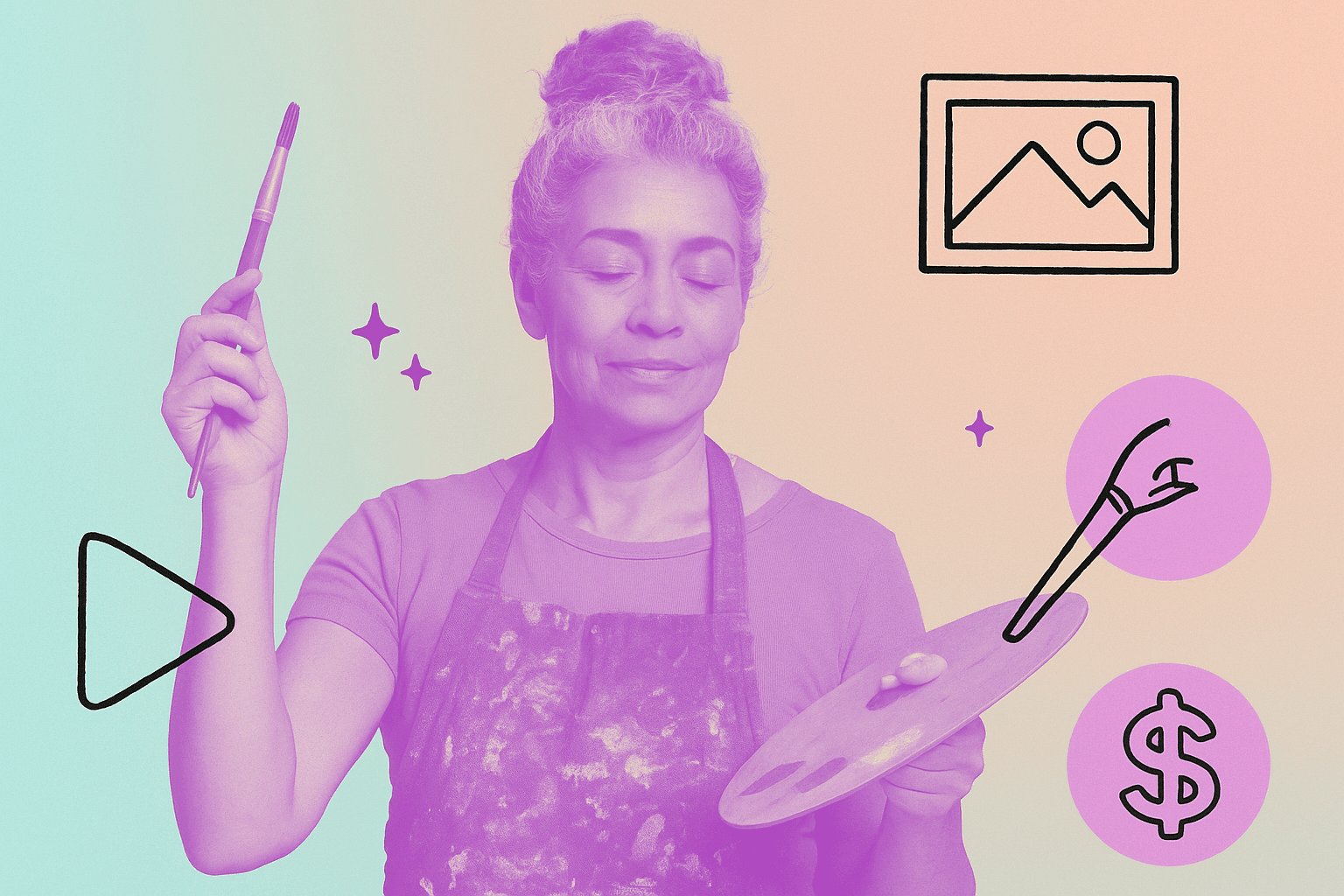
Teaching art online isn't just possible - it's incredibly profitable. We've watched artists go from struggling to pay rent to building six-figure course businesses by packaging their skills into digital courses.
Here’s the thing: people are desperate to learn creative skills, especially after spending years in corporate jobs that drain their artistic souls. Your art course isn’t just teaching technique - you’re giving people a creative outlet they’ve been craving.
(Ready to get started? Teachery’s design flexibility lets you create stunning course sites that reflect your artistic brand - but first, let’s nail your strategy.)
Key Facts
The online art education market reached $3.2 billion in 2025 - with 73% growth driven by hobby learners seeking creative fulfillment after work hours
Art course creators earn 40% more per student - compared to academic subjects, with average course prices ranging from $150-$800 due to hands-on nature
Video-based art courses have 85% higher completion rates - than text-based courses, as students need to see brush strokes and techniques in real-time
Art instructors using platforms with 0% transaction fees keep $200 more - per 10-student course compared to platforms charging 3-5% payment processing fees
Why Art is Perfect for Online Courses
Visual learning translates beautifully to video. Art is inherently visual, which makes it ideal for online education. Students can watch your brush strokes, see your color mixing in real-time, and pause to study your techniques frame by frame.
Students want to create, not just consume. Unlike passive learning topics, art courses give people something tangible to show for their time. They finish with actual artwork they’re proud of - and that pride keeps them coming back for more courses.
Art has universal appeal across age groups. We’ve seen successful art courses targeted at everyone from busy moms looking for stress relief to retirees wanting to explore watercolors. The market is massive and diverse.
High perceived value with relatively low production costs. People understand that artistic skill takes years to develop, so they’re willing to pay premium prices for quality instruction. Meanwhile, your main production cost is time - no expensive equipment or materials to ship.
Built-in community aspect. Art students love sharing their work and getting feedback. This natural tendency toward community makes it easier to build engagement and loyalty around your courses.
What to Include in Your Art Course
Don’t just teach technique - create a complete learning experience. Here’s how to structure your modules:
Module 1: Materials and Setup
Cover exactly what supplies students need (with specific brand recommendations) and how to set up their workspace. Include a shopping list PDF they can take to the art store. This eliminates the overwhelm of not knowing where to start.
Module 2: Fundamental Techniques
Break down your core techniques into digestible lessons. For watercolor, this might be wet-on-wet, wet-on-dry, and color mixing. For drawing, cover line weight, shading, and proportion. Keep each lesson under 15 minutes.
Module 3: Your First Complete Project
Guide students through creating one finished piece from start to end. Choose something achievable but impressive - maybe a simple landscape or still life. This gives them that crucial early win.
Module 4: Building Complexity
Introduce more advanced concepts through a second, more challenging project. This is where you can teach perspective, advanced color theory, or more complex compositions.
Module 5: Developing Your Style
Help students move beyond copying your work to finding their own artistic voice. Include exercises for experimentation and self-discovery. This is what transforms students into real artists.
Module 6: Troubleshooting Common Mistakes
Address the problems you see students struggle with most. Film yourself fixing common errors in real-time. These troubleshooting videos often become students’ most-watched content.
Bonus Module: Going Further
Include resources for continued learning: recommended books, other artists to follow, ways to display and preserve their work, or even how to start selling their art. This extends the value beyond just technique.
Each module should include both video lessons and downloadable resources - reference sheets, color charts, practice exercises, or templates they can trace for practice.
How to Price Your Art Course
Art course pricing depends heavily on your depth of content and target audience. Here’s what actually works:
Beginner self-paced courses: $47–$197. These cover fundamental techniques with 3–5 hours of content. Perfect for people dipping their toes into art for the first time. Price toward the lower end if you’re just starting out, higher end if you have strong credentials or unique techniques.
Comprehensive skill courses: $197–$497. These go deep on a specific medium or style with 6–12 hours of content, multiple projects, and extensive resources. This is your sweet spot for most art courses - enough content to justify the price but accessible to hobbyists.
Premium courses with coaching: $497–$1,297. Include live Q&A sessions, feedback on student work, or a private community. The coaching element justifies the premium pricing and creates better student outcomes.
Masterclass-style courses: $297–$997. Position yourself as the expert teaching your signature style or advanced professional techniques. These work best when you have an established reputation or unique approach to your medium.
Real talk: most first-time course creators underprice their art courses. Your years of artistic development have value. Don’t compete on price - compete on quality and unique perspective.
For detailed pricing strategies, check out our guide on how to price your online course.
How to Find Students and Sell Your Course
Marketing an art course requires showing your work, not just talking about it. Here are the strategies that actually work:
1. Instagram and TikTok Process Videos
Film time-lapses of your artwork in progress. These videos are incredibly engaging and give people a taste of what they’ll learn in your course. Add text overlays explaining your techniques or decision-making process.
Post consistently - aim for 3–5 videos per week showing different stages of your process. When people comment asking how you did something, that’s your opening to mention your course.
2. YouTube Tutorial Channel
Create free tutorial videos that teach simplified versions of what’s in your paid course. A 10-minute YouTube video on basic watercolor techniques can drive students to your comprehensive course.
End each video with a clear call-to-action: “If you want to learn the advanced techniques I use to create paintings like this, check out my complete watercolor course.”
3. Partner with Art Supply Stores
Reach out to local art stores about teaching in-person workshops that lead to online course sales. Many stores are eager to offer classes but don’t have qualified instructors.
Even if you’re not local, you can partner with online art supply retailers. Offer their customers a discount on your course in exchange for them promoting it to their email list.
4. Free Mini-Course Lead Magnet
Create a condensed version of your course - maybe “3 Essential Watercolor Techniques in 30 Minutes.” Offer it free in exchange for email addresses, then follow up with information about your paid course.
This works especially well if you’re starting without an audience. Our post on how to launch a digital product with no audience has more strategies for building from zero.
Building Your Art Course Platform
Here’s where most artists get stuck: they spend weeks researching course platforms instead of creating content. Let’s fix that.
You need a platform that lets your visual content shine. Generic templates won’t cut it when you’re selling something as personal and visual as art instruction.
Teachery gives you complete design control - upload custom fonts, adjust every color, arrange layouts exactly how you want them. No two Teachery courses look the same, which matters when your brand is built on visual creativity.
Plus, there are no transaction fees eating into your revenue. When you’re selling courses at $197–$497, those 5% fees from other platforms add up fast. Teachery’s 0% transaction fee policy means more money stays in your pocket.
The platform handles video hosting, drip content scheduling, and student management - all the technical stuff you don’t want to worry about. You focus on creating amazing content; Teachery handles the rest.
Your Next Steps
Start with one focused course rather than trying to teach everything at once. Pick your strongest skill - the thing people always ask you about - and build a course around that.
Film a few test lessons with your phone to validate the concept. Share them with friends or post them free on social media to gauge interest. Once you see people engaging and asking for more, you know you’re onto something.
Then commit to creating the full course. Set a launch date 6–8 weeks out and work backward from there. Having a deadline forces you to ship instead of endlessly tweaking.
Teaching art online isn’t just about the extra income (though that’s nice). It’s about sharing your passion with people who genuinely want to learn. Every time a student posts their first painting or sends you a photo of something they created, you’ll remember why you started.
Ready to turn your artistic skills into a thriving course business? Teachery’s Lifetime Deal at $950 means you’ll never pay monthly fees again - perfect for artists who want to focus on creating, not worrying about recurring costs. Start your free trial and see why thousands of creators choose Teachery to showcase their expertise.
Related Reading
Frequently Asked Questions
How much money can you make selling art courses online?
Art course creators typically earn between $2,000-$15,000 per month, with successful instructors charging $150-$800 per course depending on skill level and course depth. Top performers often generate six-figure annual revenues by creating multiple courses and building engaged communities around their teaching.
What’s the best platform to sell art courses online in 2026?
Teachery stands out for art courses because of its extreme design customization capabilities, allowing creators to build visually stunning course sites that reflect their artistic brand for just $49/month. Unlike other platforms that charge 3-5% transaction fees, Teachery charges 0% on all plans, meaning you keep more revenue from each sale.
How long should an online art course be?
Most successful online art courses contain 8-15 video lessons lasting 15-30 minutes each, totaling 4-8 hours of content. Students prefer bite-sized lessons they can complete in one sitting, with clear project milestones that build skills progressively from basic techniques to finished artworks.
What equipment do I need to create an art course online?
You need a decent camera or smartphone (iPhone 12 or newer works well), good lighting setup ($50-$200 for basic lights), and a tripod with overhead mounting capability for filming your artwork. Audio quality is crucial, so invest in a lapel microphone ($30-$100) to ensure clear instruction delivery throughout your lessons.
Here’s the thing: people are desperate to learn creative skills, especially after spending years in corporate jobs that drain their artistic souls. Your art course isn’t just teaching technique - you’re giving people a creative outlet they’ve been craving.
(Ready to get started? Teachery’s design flexibility lets you create stunning course sites that reflect your artistic brand - but first, let’s nail your strategy.)
Key Facts
The online art education market reached $3.2 billion in 2025 - with 73% growth driven by hobby learners seeking creative fulfillment after work hours
Art course creators earn 40% more per student - compared to academic subjects, with average course prices ranging from $150-$800 due to hands-on nature
Video-based art courses have 85% higher completion rates - than text-based courses, as students need to see brush strokes and techniques in real-time
Art instructors using platforms with 0% transaction fees keep $200 more - per 10-student course compared to platforms charging 3-5% payment processing fees
Why Art is Perfect for Online Courses
Visual learning translates beautifully to video. Art is inherently visual, which makes it ideal for online education. Students can watch your brush strokes, see your color mixing in real-time, and pause to study your techniques frame by frame.
Students want to create, not just consume. Unlike passive learning topics, art courses give people something tangible to show for their time. They finish with actual artwork they’re proud of - and that pride keeps them coming back for more courses.
Art has universal appeal across age groups. We’ve seen successful art courses targeted at everyone from busy moms looking for stress relief to retirees wanting to explore watercolors. The market is massive and diverse.
High perceived value with relatively low production costs. People understand that artistic skill takes years to develop, so they’re willing to pay premium prices for quality instruction. Meanwhile, your main production cost is time - no expensive equipment or materials to ship.
Built-in community aspect. Art students love sharing their work and getting feedback. This natural tendency toward community makes it easier to build engagement and loyalty around your courses.
What to Include in Your Art Course
Don’t just teach technique - create a complete learning experience. Here’s how to structure your modules:
Module 1: Materials and Setup
Cover exactly what supplies students need (with specific brand recommendations) and how to set up their workspace. Include a shopping list PDF they can take to the art store. This eliminates the overwhelm of not knowing where to start.
Module 2: Fundamental Techniques
Break down your core techniques into digestible lessons. For watercolor, this might be wet-on-wet, wet-on-dry, and color mixing. For drawing, cover line weight, shading, and proportion. Keep each lesson under 15 minutes.
Module 3: Your First Complete Project
Guide students through creating one finished piece from start to end. Choose something achievable but impressive - maybe a simple landscape or still life. This gives them that crucial early win.
Module 4: Building Complexity
Introduce more advanced concepts through a second, more challenging project. This is where you can teach perspective, advanced color theory, or more complex compositions.
Module 5: Developing Your Style
Help students move beyond copying your work to finding their own artistic voice. Include exercises for experimentation and self-discovery. This is what transforms students into real artists.
Module 6: Troubleshooting Common Mistakes
Address the problems you see students struggle with most. Film yourself fixing common errors in real-time. These troubleshooting videos often become students’ most-watched content.
Bonus Module: Going Further
Include resources for continued learning: recommended books, other artists to follow, ways to display and preserve their work, or even how to start selling their art. This extends the value beyond just technique.
Each module should include both video lessons and downloadable resources - reference sheets, color charts, practice exercises, or templates they can trace for practice.
How to Price Your Art Course
Art course pricing depends heavily on your depth of content and target audience. Here’s what actually works:
Beginner self-paced courses: $47–$197. These cover fundamental techniques with 3–5 hours of content. Perfect for people dipping their toes into art for the first time. Price toward the lower end if you’re just starting out, higher end if you have strong credentials or unique techniques.
Comprehensive skill courses: $197–$497. These go deep on a specific medium or style with 6–12 hours of content, multiple projects, and extensive resources. This is your sweet spot for most art courses - enough content to justify the price but accessible to hobbyists.
Premium courses with coaching: $497–$1,297. Include live Q&A sessions, feedback on student work, or a private community. The coaching element justifies the premium pricing and creates better student outcomes.
Masterclass-style courses: $297–$997. Position yourself as the expert teaching your signature style or advanced professional techniques. These work best when you have an established reputation or unique approach to your medium.
Real talk: most first-time course creators underprice their art courses. Your years of artistic development have value. Don’t compete on price - compete on quality and unique perspective.
For detailed pricing strategies, check out our guide on how to price your online course.
How to Find Students and Sell Your Course
Marketing an art course requires showing your work, not just talking about it. Here are the strategies that actually work:
1. Instagram and TikTok Process Videos
Film time-lapses of your artwork in progress. These videos are incredibly engaging and give people a taste of what they’ll learn in your course. Add text overlays explaining your techniques or decision-making process.
Post consistently - aim for 3–5 videos per week showing different stages of your process. When people comment asking how you did something, that’s your opening to mention your course.
2. YouTube Tutorial Channel
Create free tutorial videos that teach simplified versions of what’s in your paid course. A 10-minute YouTube video on basic watercolor techniques can drive students to your comprehensive course.
End each video with a clear call-to-action: “If you want to learn the advanced techniques I use to create paintings like this, check out my complete watercolor course.”
3. Partner with Art Supply Stores
Reach out to local art stores about teaching in-person workshops that lead to online course sales. Many stores are eager to offer classes but don’t have qualified instructors.
Even if you’re not local, you can partner with online art supply retailers. Offer their customers a discount on your course in exchange for them promoting it to their email list.
4. Free Mini-Course Lead Magnet
Create a condensed version of your course - maybe “3 Essential Watercolor Techniques in 30 Minutes.” Offer it free in exchange for email addresses, then follow up with information about your paid course.
This works especially well if you’re starting without an audience. Our post on how to launch a digital product with no audience has more strategies for building from zero.
Building Your Art Course Platform
Here’s where most artists get stuck: they spend weeks researching course platforms instead of creating content. Let’s fix that.
You need a platform that lets your visual content shine. Generic templates won’t cut it when you’re selling something as personal and visual as art instruction.
Teachery gives you complete design control - upload custom fonts, adjust every color, arrange layouts exactly how you want them. No two Teachery courses look the same, which matters when your brand is built on visual creativity.
Plus, there are no transaction fees eating into your revenue. When you’re selling courses at $197–$497, those 5% fees from other platforms add up fast. Teachery’s 0% transaction fee policy means more money stays in your pocket.
The platform handles video hosting, drip content scheduling, and student management - all the technical stuff you don’t want to worry about. You focus on creating amazing content; Teachery handles the rest.
Your Next Steps
Start with one focused course rather than trying to teach everything at once. Pick your strongest skill - the thing people always ask you about - and build a course around that.
Film a few test lessons with your phone to validate the concept. Share them with friends or post them free on social media to gauge interest. Once you see people engaging and asking for more, you know you’re onto something.
Then commit to creating the full course. Set a launch date 6–8 weeks out and work backward from there. Having a deadline forces you to ship instead of endlessly tweaking.
Teaching art online isn’t just about the extra income (though that’s nice). It’s about sharing your passion with people who genuinely want to learn. Every time a student posts their first painting or sends you a photo of something they created, you’ll remember why you started.
Ready to turn your artistic skills into a thriving course business? Teachery’s Lifetime Deal at $950 means you’ll never pay monthly fees again - perfect for artists who want to focus on creating, not worrying about recurring costs. Start your free trial and see why thousands of creators choose Teachery to showcase their expertise.
Related Reading
Frequently Asked Questions
How much money can you make selling art courses online?
Art course creators typically earn between $2,000-$15,000 per month, with successful instructors charging $150-$800 per course depending on skill level and course depth. Top performers often generate six-figure annual revenues by creating multiple courses and building engaged communities around their teaching.
What’s the best platform to sell art courses online in 2026?
Teachery stands out for art courses because of its extreme design customization capabilities, allowing creators to build visually stunning course sites that reflect their artistic brand for just $49/month. Unlike other platforms that charge 3-5% transaction fees, Teachery charges 0% on all plans, meaning you keep more revenue from each sale.
How long should an online art course be?
Most successful online art courses contain 8-15 video lessons lasting 15-30 minutes each, totaling 4-8 hours of content. Students prefer bite-sized lessons they can complete in one sitting, with clear project milestones that build skills progressively from basic techniques to finished artworks.
What equipment do I need to create an art course online?
You need a decent camera or smartphone (iPhone 12 or newer works well), good lighting setup ($50-$200 for basic lights), and a tripod with overhead mounting capability for filming your artwork. Audio quality is crucial, so invest in a lapel microphone ($30-$100) to ensure clear instruction delivery throughout your lessons.