
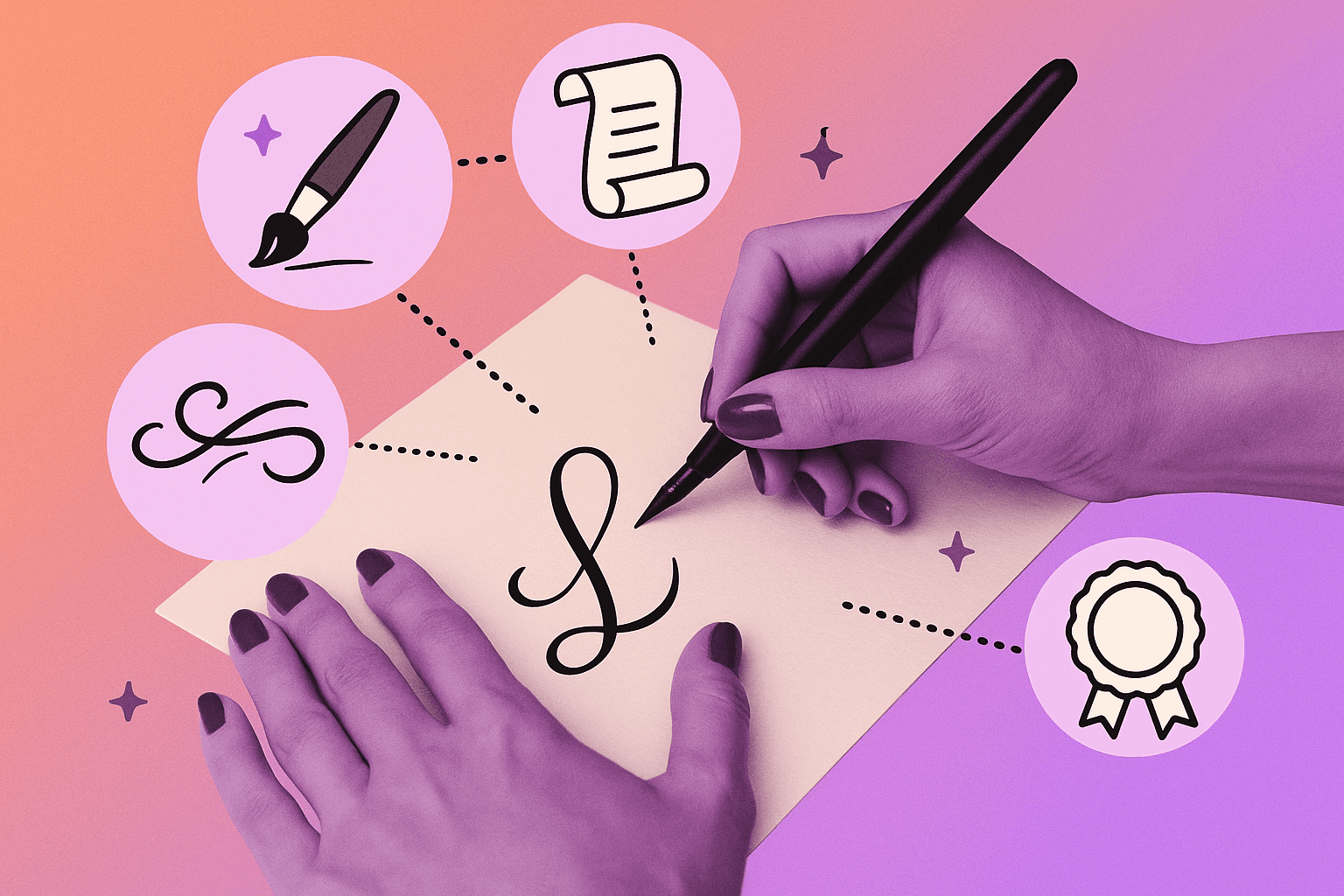
Calligraphy has exploded in popularity, with searches for 'learn calligraphy' up 150% since 2023. Whether you're a professional lettering artist or someone who picked up a brush pen during lockdown, there's never been a better time to turn your skills into a profitable online course.
Calligraphy has exploded in popularity, with searches for ‘learn calligraphy’ up 150% since 2023. Whether you’re a professional lettering artist or someone who picked up a brush pen during lockdown and fell in love, there’s never been a better time to turn your calligraphy skills into an online course that actually sells.
Ready to start building your calligraphy course? Try Teachery free for 14 days - no credit card required.
Key Facts
Market Size - The global online art education market is projected to reach $4.8 billion by 2027
Price Range - Calligraphy courses typically sell for $47-$297 for self-paced content, $497-$997 for premium offerings with coaching
Platform Costs - Teachery charges 0% transaction fees on all plans while Teachable charges 5% on its Basic plan
Content Length - Successful calligraphy courses average 6-8 modules with 2-4 hours of total video content
Why Calligraphy is Perfect for Online Courses
Here’s the thing - calligraphy might be one of the most course-friendly skills you can teach online. Here’s why it works so well:
It’s Visually Stunning
Unlike many skills that are hard to demonstrate, calligraphy is pure visual magic. Students can see exactly what you’re doing, stroke by stroke. Your course preview videos will stop people scrolling because beautiful lettering is inherently shareable and mesmerizing to watch.
We’ve seen calligraphy courses with simple iPhone videos of hands lettering get thousands of views on social media - that’s built-in marketing right there.
Clear Skill Progression
Calligraphy has obvious levels: basic strokes, individual letters, words, sentences, then advanced techniques like flourishes and different styles. This makes it easy to structure a course that feels valuable at each step.
Students love courses where they can see their improvement week by week. With calligraphy, the before-and-after photos practically create themselves.
Low Barrier to Entry
Unlike pottery or oil painting, students don’t need expensive equipment or a dedicated studio. A few brush pens, practice paper, and good lighting for photos? They’re set. This means more people can actually follow through on buying and completing your course.
Multiple Monetization Opportunities
Smart calligraphy instructors don’t just sell one course. They create ecosystems: beginner courses, advanced techniques, specific styles (modern, traditional, brush lettering), business courses for aspiring calligraphers, and even digital templates or practice sheets as additional digital products.
What to Include in Your Calligraphy Course
The best calligraphy courses follow a logical progression that builds confidence while delivering quick wins. Here’s what we recommend including:
Module 1: Foundation and Supplies
Start with the basics students actually need to know. Cover essential supplies (and why expensive isn’t always better), proper posture and hand positioning, and setting up a practice space with good lighting. Include a downloadable supply list with specific product recommendations.
Module 2: Basic Strokes and Letter Forms
This is where the magic happens. Teach the fundamental strokes that create every letter. Start with simple upstrokes, downstrokes, and curves. Then show how these combine to form basic lowercase letters. Include lots of practice worksheets - people love printable resources.
Module 3: Uppercase Letters and Consistency
Cover uppercase letters and focus heavily on consistency. This is where students often struggle, so provide clear guidelines for letter spacing, baseline alignment, and maintaining consistent letter height and slant.
Module 4: Connecting Letters and Word Formation
Show how letters flow together naturally. Cover common letter combinations that trip up beginners, and teach techniques for maintaining rhythm and flow across entire words.
Module 5: Layout and Composition
This separates amateur work from professional-looking pieces. Teach basic design principles, how to plan layouts, working with different paper sizes, and creating balanced compositions with multiple words or phrases.
Module 6: Troubleshooting and Common Mistakes
Address the problems every student will face: wobbly lines, inconsistent letter sizes, ink blots, and how to fix mistakes gracefully. Include before-and-after examples of common issues and their solutions.
Module 7: Advanced Techniques and Personal Style
Once students have the basics down, teach flourishes, decorative elements, and how to develop their own lettering style. This is where students start feeling like real artists instead of just copying your examples.
Module 8: Turning Skills into Income (Optional but Valuable)
If you’re targeting people who want to monetize their new skills, include a module on pricing custom work, finding clients, photographing finished pieces, and building a portfolio. This can justify premium pricing for your course.
How to Price Your Calligraphy Course
Pricing is where most course creators either leave money on the table or price themselves out of sales. Here’s what actually works for calligraphy courses in 2026:
Self-Paced Beginner Course: $47-$97
This sweet spot works for comprehensive beginner courses with 6-8 modules of video content, practice sheets, and basic templates. Students see it as affordable enough to try without major financial risk, but valuable enough that they take it seriously.
Intermediate/Advanced Course: $127-$197
Once you have a following and proven results, you can charge more for specialized techniques like wedding calligraphy, logo design, or specific historical styles. These courses serve students who’ve already invested in learning basics and want to level up.
Premium Course with Coaching: $297-$997
This includes everything above plus live Q&A calls, personalized feedback on student work, or a private community. The higher end works if you’re a recognized expert with a strong personal brand and portfolio of professional work.
Bundle Strategy: $197-$397
Package your beginner course with bonus materials like business training, advanced techniques, or seasonal projects (holiday cards, wedding signage, etc.). Bundles often outperform single courses because they feel like better value.
Real talk: Start at the lower end of these ranges. You can always raise prices as you prove the course works and build testimonials. It’s much harder to lower prices without looking desperate.
How to Find Students and Sell Your Course
The best calligraphy courses sell themselves through demonstration, but you still need to get in front of the right people. Here are the strategies that actually work:
Instagram and TikTok Process Videos
This is the obvious one, but most people do it wrong. Don’t just post pretty finished pieces. Show the messy process, common mistakes, and your problem-solving in real time. These “behind the scenes” videos perform better than perfect final results.
Post consistently and use relevant hashtags like #moderncalligraphy, #brushlettering, and #handlettering. But here’s what most miss: engage genuinely with other calligraphers’ content. The community is supportive, and visibility comes from participation, not just posting.
Pinterest for Long-Term Traffic
Pinterest is a goldmine for calligraphy content because people actively search for lettering inspiration, practice worksheets, and tutorials. Create pins for your free practice sheets, quote designs, and course previews. Include text overlays that clearly explain what someone will learn.
The key is consistency - pin regularly and create fresh content that stands out in search results.
Free Mini-Course or Starter Guide
Give away a condensed version of your course covering one specific technique (like basic brush pen strokes or lettering a simple quote). This builds trust and gives people a taste of your teaching style before they commit to a full course.
Use this as a lead magnet to build your email list, then nurture those subscribers with regular tips, inspiration, and eventual course offers.
Partnerships with Craft and Stationery Brands
Many calligraphy students also love general crafting, bullet journaling, and stationery. Partner with relevant brands for cross-promotion, affiliate opportunities, or even sponsored content that showcases your skills while promoting products your students actually use.
This works especially well if you can demonstrate techniques using specific products - it’s valuable for your students and the brand gets authentic product placement.
Choosing the Right Platform for Your Calligraphy Course
Here’s where platform choice really matters. Calligraphy courses are visual, so you need a platform that makes your content look professional and gives you control over the design experience.
We’ve been building and selling online courses since 2013, and we’ve seen too many beautiful calligraphy courses buried inside generic, template-heavy platforms where every course looks identical.
If you want your course to stand out, you need design flexibility. Teachery lets you customize colors, fonts, and layouts to match your aesthetic. When someone lands on your course page, it should feel like an extension of your Instagram feed or portfolio - cohesive and intentionally designed.
The numbers matter too. Teachery charges 0% transaction fees on every plan, while many competitors take 5-10% of every sale. On a $197 course, that’s $10-$20 per student going to platform fees instead of your pocket.
For calligraphy instructors especially, Teachery’s Lifetime Deal at $950 makes financial sense. Instead of paying $50-$100+ monthly forever (like you would with Kajabi or other Thinkific alternatives), you own your platform outright. That’s the difference between profit and breaking even, especially in your first year of sales.
Getting Started: Your First 30 Days
Ready to turn your calligraphy skills into a course that sells? Here’s your roadmap:
Week 1: Outline your course modules and film one complete lesson as a test. See how long it takes, what equipment setup works best, and how comfortable you are on camera.
Week 2: Create your course landing page and write compelling copy that focuses on student outcomes, not just techniques you’ll teach. Set up your free Teachery trial to start building.
Week 3: Film the rest of your content and create supporting materials like practice worksheets and supply lists. Batch similar tasks - film all lessons in one or two sessions if possible.
Week 4: Upload everything to your platform, test the user experience, and start building anticipation on social media with behind-the-scenes content and sneak peeks.
The calligraphy course market isn’t oversaturated - it’s underserved by quality instruction that actually helps people improve. If you can teach someone to letter their first beautiful quote or address their wedding invitations with confidence, you’ve created something valuable that people will gladly pay for.
Related Reading
Frequently Asked Questions
How much should I charge for a calligraphy course online?
Self-paced calligraphy courses typically sell for $47-$197, depending on depth and included materials. Beginner courses with 6-8 modules work well at $47-$97, while advanced courses with specialized techniques can command $127-$197. Premium courses that include live coaching or feedback can sell for $297-$997.
What’s the best platform to sell a calligraphy course online?
Look for platforms with strong design customization since calligraphy is a visual art form. Teachery offers unlimited design control and charges 0% transaction fees, while alternatives like Teachable charge 5% on basic plans. The platform should let you create a course experience that matches your artistic brand and aesthetic.
How long should my calligraphy course be?
Most successful calligraphy courses include 6-8 modules with 2-4 hours of total video content. Focus on quality over quantity - students prefer shorter, focused lessons they can complete in one sitting over long lectures. Include plenty of practice materials and worksheets to extend the learning experience beyond just videos.
Do I need professional video equipment to teach calligraphy online?
No, many successful calligraphy instructors start with just a smartphone and good lighting. The key is a stable overhead shot that clearly shows your hand movements and letter formation. Natural lighting or a simple ring light works better than expensive studio setups for demonstrating hand lettering techniques.
Calligraphy has exploded in popularity, with searches for ‘learn calligraphy’ up 150% since 2023. Whether you’re a professional lettering artist or someone who picked up a brush pen during lockdown and fell in love, there’s never been a better time to turn your calligraphy skills into an online course that actually sells.
Ready to start building your calligraphy course? Try Teachery free for 14 days - no credit card required.
Key Facts
Market Size - The global online art education market is projected to reach $4.8 billion by 2027
Price Range - Calligraphy courses typically sell for $47-$297 for self-paced content, $497-$997 for premium offerings with coaching
Platform Costs - Teachery charges 0% transaction fees on all plans while Teachable charges 5% on its Basic plan
Content Length - Successful calligraphy courses average 6-8 modules with 2-4 hours of total video content
Why Calligraphy is Perfect for Online Courses
Here’s the thing - calligraphy might be one of the most course-friendly skills you can teach online. Here’s why it works so well:
It’s Visually Stunning
Unlike many skills that are hard to demonstrate, calligraphy is pure visual magic. Students can see exactly what you’re doing, stroke by stroke. Your course preview videos will stop people scrolling because beautiful lettering is inherently shareable and mesmerizing to watch.
We’ve seen calligraphy courses with simple iPhone videos of hands lettering get thousands of views on social media - that’s built-in marketing right there.
Clear Skill Progression
Calligraphy has obvious levels: basic strokes, individual letters, words, sentences, then advanced techniques like flourishes and different styles. This makes it easy to structure a course that feels valuable at each step.
Students love courses where they can see their improvement week by week. With calligraphy, the before-and-after photos practically create themselves.
Low Barrier to Entry
Unlike pottery or oil painting, students don’t need expensive equipment or a dedicated studio. A few brush pens, practice paper, and good lighting for photos? They’re set. This means more people can actually follow through on buying and completing your course.
Multiple Monetization Opportunities
Smart calligraphy instructors don’t just sell one course. They create ecosystems: beginner courses, advanced techniques, specific styles (modern, traditional, brush lettering), business courses for aspiring calligraphers, and even digital templates or practice sheets as additional digital products.
What to Include in Your Calligraphy Course
The best calligraphy courses follow a logical progression that builds confidence while delivering quick wins. Here’s what we recommend including:
Module 1: Foundation and Supplies
Start with the basics students actually need to know. Cover essential supplies (and why expensive isn’t always better), proper posture and hand positioning, and setting up a practice space with good lighting. Include a downloadable supply list with specific product recommendations.
Module 2: Basic Strokes and Letter Forms
This is where the magic happens. Teach the fundamental strokes that create every letter. Start with simple upstrokes, downstrokes, and curves. Then show how these combine to form basic lowercase letters. Include lots of practice worksheets - people love printable resources.
Module 3: Uppercase Letters and Consistency
Cover uppercase letters and focus heavily on consistency. This is where students often struggle, so provide clear guidelines for letter spacing, baseline alignment, and maintaining consistent letter height and slant.
Module 4: Connecting Letters and Word Formation
Show how letters flow together naturally. Cover common letter combinations that trip up beginners, and teach techniques for maintaining rhythm and flow across entire words.
Module 5: Layout and Composition
This separates amateur work from professional-looking pieces. Teach basic design principles, how to plan layouts, working with different paper sizes, and creating balanced compositions with multiple words or phrases.
Module 6: Troubleshooting and Common Mistakes
Address the problems every student will face: wobbly lines, inconsistent letter sizes, ink blots, and how to fix mistakes gracefully. Include before-and-after examples of common issues and their solutions.
Module 7: Advanced Techniques and Personal Style
Once students have the basics down, teach flourishes, decorative elements, and how to develop their own lettering style. This is where students start feeling like real artists instead of just copying your examples.
Module 8: Turning Skills into Income (Optional but Valuable)
If you’re targeting people who want to monetize their new skills, include a module on pricing custom work, finding clients, photographing finished pieces, and building a portfolio. This can justify premium pricing for your course.
How to Price Your Calligraphy Course
Pricing is where most course creators either leave money on the table or price themselves out of sales. Here’s what actually works for calligraphy courses in 2026:
Self-Paced Beginner Course: $47-$97
This sweet spot works for comprehensive beginner courses with 6-8 modules of video content, practice sheets, and basic templates. Students see it as affordable enough to try without major financial risk, but valuable enough that they take it seriously.
Intermediate/Advanced Course: $127-$197
Once you have a following and proven results, you can charge more for specialized techniques like wedding calligraphy, logo design, or specific historical styles. These courses serve students who’ve already invested in learning basics and want to level up.
Premium Course with Coaching: $297-$997
This includes everything above plus live Q&A calls, personalized feedback on student work, or a private community. The higher end works if you’re a recognized expert with a strong personal brand and portfolio of professional work.
Bundle Strategy: $197-$397
Package your beginner course with bonus materials like business training, advanced techniques, or seasonal projects (holiday cards, wedding signage, etc.). Bundles often outperform single courses because they feel like better value.
Real talk: Start at the lower end of these ranges. You can always raise prices as you prove the course works and build testimonials. It’s much harder to lower prices without looking desperate.
How to Find Students and Sell Your Course
The best calligraphy courses sell themselves through demonstration, but you still need to get in front of the right people. Here are the strategies that actually work:
Instagram and TikTok Process Videos
This is the obvious one, but most people do it wrong. Don’t just post pretty finished pieces. Show the messy process, common mistakes, and your problem-solving in real time. These “behind the scenes” videos perform better than perfect final results.
Post consistently and use relevant hashtags like #moderncalligraphy, #brushlettering, and #handlettering. But here’s what most miss: engage genuinely with other calligraphers’ content. The community is supportive, and visibility comes from participation, not just posting.
Pinterest for Long-Term Traffic
Pinterest is a goldmine for calligraphy content because people actively search for lettering inspiration, practice worksheets, and tutorials. Create pins for your free practice sheets, quote designs, and course previews. Include text overlays that clearly explain what someone will learn.
The key is consistency - pin regularly and create fresh content that stands out in search results.
Free Mini-Course or Starter Guide
Give away a condensed version of your course covering one specific technique (like basic brush pen strokes or lettering a simple quote). This builds trust and gives people a taste of your teaching style before they commit to a full course.
Use this as a lead magnet to build your email list, then nurture those subscribers with regular tips, inspiration, and eventual course offers.
Partnerships with Craft and Stationery Brands
Many calligraphy students also love general crafting, bullet journaling, and stationery. Partner with relevant brands for cross-promotion, affiliate opportunities, or even sponsored content that showcases your skills while promoting products your students actually use.
This works especially well if you can demonstrate techniques using specific products - it’s valuable for your students and the brand gets authentic product placement.
Choosing the Right Platform for Your Calligraphy Course
Here’s where platform choice really matters. Calligraphy courses are visual, so you need a platform that makes your content look professional and gives you control over the design experience.
We’ve been building and selling online courses since 2013, and we’ve seen too many beautiful calligraphy courses buried inside generic, template-heavy platforms where every course looks identical.
If you want your course to stand out, you need design flexibility. Teachery lets you customize colors, fonts, and layouts to match your aesthetic. When someone lands on your course page, it should feel like an extension of your Instagram feed or portfolio - cohesive and intentionally designed.
The numbers matter too. Teachery charges 0% transaction fees on every plan, while many competitors take 5-10% of every sale. On a $197 course, that’s $10-$20 per student going to platform fees instead of your pocket.
For calligraphy instructors especially, Teachery’s Lifetime Deal at $950 makes financial sense. Instead of paying $50-$100+ monthly forever (like you would with Kajabi or other Thinkific alternatives), you own your platform outright. That’s the difference between profit and breaking even, especially in your first year of sales.
Getting Started: Your First 30 Days
Ready to turn your calligraphy skills into a course that sells? Here’s your roadmap:
Week 1: Outline your course modules and film one complete lesson as a test. See how long it takes, what equipment setup works best, and how comfortable you are on camera.
Week 2: Create your course landing page and write compelling copy that focuses on student outcomes, not just techniques you’ll teach. Set up your free Teachery trial to start building.
Week 3: Film the rest of your content and create supporting materials like practice worksheets and supply lists. Batch similar tasks - film all lessons in one or two sessions if possible.
Week 4: Upload everything to your platform, test the user experience, and start building anticipation on social media with behind-the-scenes content and sneak peeks.
The calligraphy course market isn’t oversaturated - it’s underserved by quality instruction that actually helps people improve. If you can teach someone to letter their first beautiful quote or address their wedding invitations with confidence, you’ve created something valuable that people will gladly pay for.
Related Reading
Frequently Asked Questions
How much should I charge for a calligraphy course online?
Self-paced calligraphy courses typically sell for $47-$197, depending on depth and included materials. Beginner courses with 6-8 modules work well at $47-$97, while advanced courses with specialized techniques can command $127-$197. Premium courses that include live coaching or feedback can sell for $297-$997.
What’s the best platform to sell a calligraphy course online?
Look for platforms with strong design customization since calligraphy is a visual art form. Teachery offers unlimited design control and charges 0% transaction fees, while alternatives like Teachable charge 5% on basic plans. The platform should let you create a course experience that matches your artistic brand and aesthetic.
How long should my calligraphy course be?
Most successful calligraphy courses include 6-8 modules with 2-4 hours of total video content. Focus on quality over quantity - students prefer shorter, focused lessons they can complete in one sitting over long lectures. Include plenty of practice materials and worksheets to extend the learning experience beyond just videos.
Do I need professional video equipment to teach calligraphy online?
No, many successful calligraphy instructors start with just a smartphone and good lighting. The key is a stable overhead shot that clearly shows your hand movements and letter formation. Natural lighting or a simple ring light works better than expensive studio setups for demonstrating hand lettering techniques.