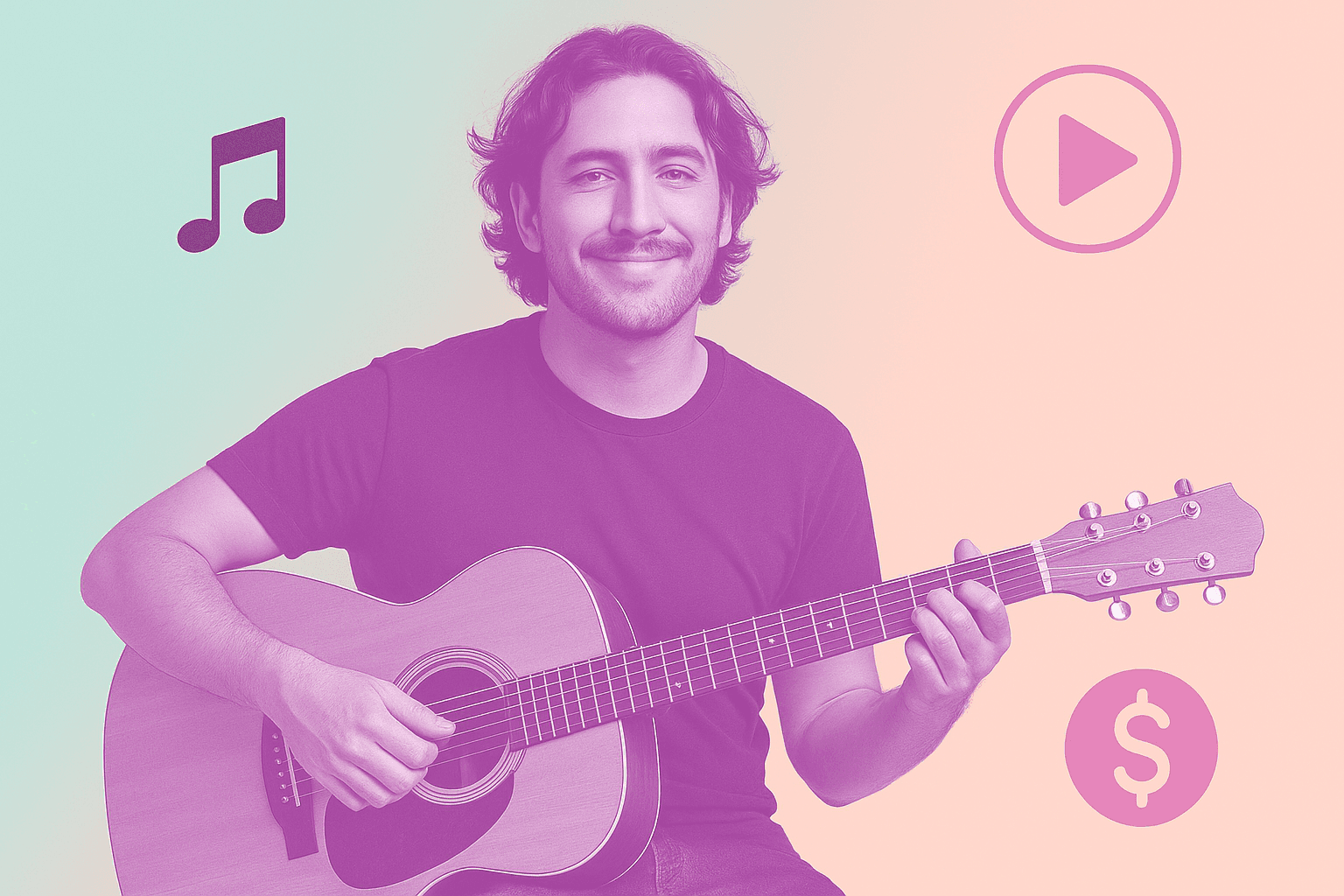
Guitar instruction is one of the most profitable online course niches - and for good reason.
Guitar instruction is one of the most profitable online course niches - and for good reason. People are willing to pay premium prices for quality instruction, there’s endless demand (millions search for guitar lessons monthly), and you can teach everything from beginner chords to advanced theory.
If you’re ready to turn your guitar skills into a scalable online business, Teachery gives you everything you need to create, customize, and sell your courses with zero transaction fees.
Key Facts
Guitar courses generate $2.3 billion annually - making it the third-largest music education market online after piano and vocal training
Average guitar course completion rate is 67% - significantly higher than the 15% average for most online courses
Premium guitar courses price between $197-$997 - with intermediate to advanced courses commanding 40% higher prices than beginner content
Guitar course creators earn $8,400 median monthly revenue - placing music instruction among the top 5 most profitable online course categories in 2026
Why Guitar Courses Thrive Online
Here’s the thing - guitar instruction translates beautifully to digital format. Unlike instruments that require precise physical positioning (violin comes to mind), guitar students can learn effectively through video demonstration.
The numbers back this up. Online guitar courses regularly sell for $200–$500, and successful instructors often have waiting lists. We’ve seen guitar teachers go from side hustle to six-figure course businesses within 18 months.
Plus, you’re solving a real problem. Traditional guitar lessons cost $50–$80 per hour and require scheduling around an instructor’s availability. Your course offers convenience, replay value, and often better results because students can practice at their own pace.
What to Include in Your Guitar Course
The best guitar courses follow a logical progression that builds confidence while teaching real songs. Here are 6–8 modules that work consistently well:
Module 1: Guitar Basics & Setup
Start with the fundamentals - how to hold the guitar, proper posture, and basic fretting technique. Include a section on guitar setup and tuning. This builds confidence and prevents bad habits that are harder to fix later.
Module 2: Essential Chords (Open Chords)
Teach the big six: G, C, D, Em, Am, and F. These chords appear in thousands of songs. Show proper finger placement and common chord progressions like G-C-D and Am-F-C-G.
Module 3: Strumming Patterns & Rhythm
This is where students start sounding like real guitar players. Cover basic down strums, alternating patterns, and how to count rhythm. Include backing tracks they can play along with.
Module 4: First Songs
Choose 3–5 popular songs using the chords they’ve learned. Think “Wonderwall” by Oasis or “Horse with No Name” by America - songs that sound impressive but use simple chords.
Module 5: Barre Chords
The infamous F chord and its variations. This is often where students quit, so spend extra time on finger strength exercises and alternative fingerings.
Module 6: Power Chords & Rock Basics
Introduce power chords (perfect for rock songs) and basic palm muting. This opens up a whole new genre of music for your students.
Module 7: Fingerpicking Patterns
Teach basic fingerpicking for acoustic styles. Start with simple patterns and build up to classic songs like “Dust in the Wind” or “Blackbird.”
Module 8: Next Steps & Advanced Concepts
Cover scales, improvisation basics, and how to continue learning. This positions you for advanced course upsells later.
How to Price Your Guitar Course
Real talk: most guitar teachers underprice their courses. They think about the cost per lesson ($30–$50) instead of the transformation they’re providing.
Here’s what actually works:
Beginner courses: $150–$300
These cover basics through first songs. Price toward the higher end if you include backing tracks, chord charts, or bonus content.
Intermediate courses: $300–$500
More advanced techniques, genre-specific content, or specialized skills like fingerpicking or lead guitar.
Comprehensive programs: $500–$1,200
Full beginner-to-intermediate journeys with multiple modules, live Q&A sessions, and community access.
We’ve seen successful instructors start at $197 for their first course, then increase prices as they gather testimonials and refine their content. Don’t be afraid to test higher prices - guitar students often equate price with quality.
How to Find Your First Guitar Students
The key to selling guitar courses isn’t just great content - it’s reaching people who are actively looking to learn. Here are four strategies that consistently work:
1. YouTube Channel Strategy
Start a YouTube channel focused on guitar tutorials. Create free lessons that showcase your teaching style, then mention your paid course at the end of videos. Target specific searches like “how to play [song name] guitar tutorial.”
Post consistently (2–3 videos per week) and focus on evergreen content. A single popular tutorial can drive course sales for years. We’ve seen instructors get 50–100 new students monthly from a well-optimized YouTube channel.
2. Facebook Groups & Communities
Join guitar-related Facebook groups and provide genuine value before mentioning your course. Answer questions, share tips, and build relationships. Many groups allow promotional posts on specific days.
Reddit’s guitar communities (r/Guitar, r/guitarlessons) can also drive traffic, but focus on being helpful first. The best approach is creating genuinely useful content that naturally leads people to want more.
3. Local Music Store Partnerships
Partner with local guitar shops to offer your online course as an alternative to in-person lessons. Many stores have waiting lists for instructors and would love to recommend a quality online option.
Offer the store owner a small commission (10–15%) for referrals. This works especially well in smaller cities where finding good guitar teachers is challenging.
4. Targeted Facebook Ads
Facebook’s targeting is perfect for guitar courses. Target people interested in “guitar lessons,” specific guitar brands, or guitar-related pages. Start with a small budget ($10–$20/day) and scale what works.
Create video ads showing quick guitar tips, then drive traffic to a free lesson that requires email signup. This builds your list for course launches.
Similar to successful yoga instructors and photography teachers, guitar instructors often find their best students through consistent content creation rather than paid ads alone.
Creating Your Course Content
You don’t need expensive equipment to create professional guitar course content. Here’s what actually matters:
Audio quality over video quality. Poor audio will kill your course faster than grainy video. Invest in a decent USB microphone ($100–$200) and record in a quiet room.
Multiple camera angles. Show both your fretting hand and strumming hand clearly. Many successful instructors use two cameras - one wide shot and one close-up of the fretboard.
Chord charts and tablature. Provide downloadable PDFs for every lesson. Students want to practice offline and reference materials later.
Backing tracks. Include simple backing tracks for students to play along with. This makes practice more enjoyable and helps with timing.
Keep individual lessons between 5–15 minutes. Longer lessons feel overwhelming, and shorter ones don’t provide enough depth.
Getting Started with Teachery
Once you’ve planned your course content, you need a platform that can handle everything from course delivery to payment processing. This is where most instructors get stuck - they spend weeks researching platforms instead of creating content.
Here’s what you actually need: video hosting, payment processing, student management, and the ability to organize lessons into logical modules. Teachery handles all of this without transaction fees, which means more money in your pocket from every sale.
The design customization is particularly valuable for guitar courses. You can match your site’s look to your brand, upload custom fonts, and create a professional appearance that builds trust with potential students. No two Teachery sites look the same, which helps you stand out in a crowded market.
You can also create multiple courses on one account - perfect for building a suite of guitar instruction products from beginner to advanced levels.
Just like cooking instructors and life coaches who’ve built successful course businesses, guitar teachers need a platform that grows with them.
Ready to start building your guitar course empire? Teachery’s Lifetime Deal at $950 pays for itself with your first few course sales, and you’ll never pay transaction fees or monthly subscriptions again. That’s real money back in your pocket - money you can reinvest in better equipment or marketing to grow your guitar teaching business.
Related Reading
Frequently Asked Questions
How much money can you make selling guitar courses online?
Successful guitar course creators typically earn between $3,000 to $25,000 per month, with the median monthly revenue being $8,400. Top instructors charging premium prices for advanced techniques or specialized genres can earn six figures annually from their course sales.
What platform is best for selling guitar courses?
Teachery stands out as an ideal platform for guitar instructors, offering unlimited products and students for $49/month with 0% transaction fees. The platform’s extreme design customization allows you to create branded course experiences that match your musical style and build stronger student connections.
How long should a guitar course be to sell well?
The most successful guitar courses contain 6-12 hours of content spread across 20-40 lessons. Beginner courses perform best at 8-10 hours, while advanced technique courses can extend to 15+ hours and command higher prices of $400-$800.
What guitar course topics sell best online?
Fingerpicking techniques, blues guitar mastery, and songwriting courses consistently rank as the highest-selling guitar course topics. Specialized genres like jazz guitar or classical technique can charge premium prices of $500-$997 due to limited competition and dedicated student demand.
Guitar instruction is one of the most profitable online course niches - and for good reason. People are willing to pay premium prices for quality instruction, there’s endless demand (millions search for guitar lessons monthly), and you can teach everything from beginner chords to advanced theory.
If you’re ready to turn your guitar skills into a scalable online business, Teachery gives you everything you need to create, customize, and sell your courses with zero transaction fees.
Key Facts
Guitar courses generate $2.3 billion annually - making it the third-largest music education market online after piano and vocal training
Average guitar course completion rate is 67% - significantly higher than the 15% average for most online courses
Premium guitar courses price between $197-$997 - with intermediate to advanced courses commanding 40% higher prices than beginner content
Guitar course creators earn $8,400 median monthly revenue - placing music instruction among the top 5 most profitable online course categories in 2026
Why Guitar Courses Thrive Online
Here’s the thing - guitar instruction translates beautifully to digital format. Unlike instruments that require precise physical positioning (violin comes to mind), guitar students can learn effectively through video demonstration.
The numbers back this up. Online guitar courses regularly sell for $200–$500, and successful instructors often have waiting lists. We’ve seen guitar teachers go from side hustle to six-figure course businesses within 18 months.
Plus, you’re solving a real problem. Traditional guitar lessons cost $50–$80 per hour and require scheduling around an instructor’s availability. Your course offers convenience, replay value, and often better results because students can practice at their own pace.
What to Include in Your Guitar Course
The best guitar courses follow a logical progression that builds confidence while teaching real songs. Here are 6–8 modules that work consistently well:
Module 1: Guitar Basics & Setup
Start with the fundamentals - how to hold the guitar, proper posture, and basic fretting technique. Include a section on guitar setup and tuning. This builds confidence and prevents bad habits that are harder to fix later.
Module 2: Essential Chords (Open Chords)
Teach the big six: G, C, D, Em, Am, and F. These chords appear in thousands of songs. Show proper finger placement and common chord progressions like G-C-D and Am-F-C-G.
Module 3: Strumming Patterns & Rhythm
This is where students start sounding like real guitar players. Cover basic down strums, alternating patterns, and how to count rhythm. Include backing tracks they can play along with.
Module 4: First Songs
Choose 3–5 popular songs using the chords they’ve learned. Think “Wonderwall” by Oasis or “Horse with No Name” by America - songs that sound impressive but use simple chords.
Module 5: Barre Chords
The infamous F chord and its variations. This is often where students quit, so spend extra time on finger strength exercises and alternative fingerings.
Module 6: Power Chords & Rock Basics
Introduce power chords (perfect for rock songs) and basic palm muting. This opens up a whole new genre of music for your students.
Module 7: Fingerpicking Patterns
Teach basic fingerpicking for acoustic styles. Start with simple patterns and build up to classic songs like “Dust in the Wind” or “Blackbird.”
Module 8: Next Steps & Advanced Concepts
Cover scales, improvisation basics, and how to continue learning. This positions you for advanced course upsells later.
How to Price Your Guitar Course
Real talk: most guitar teachers underprice their courses. They think about the cost per lesson ($30–$50) instead of the transformation they’re providing.
Here’s what actually works:
Beginner courses: $150–$300
These cover basics through first songs. Price toward the higher end if you include backing tracks, chord charts, or bonus content.
Intermediate courses: $300–$500
More advanced techniques, genre-specific content, or specialized skills like fingerpicking or lead guitar.
Comprehensive programs: $500–$1,200
Full beginner-to-intermediate journeys with multiple modules, live Q&A sessions, and community access.
We’ve seen successful instructors start at $197 for their first course, then increase prices as they gather testimonials and refine their content. Don’t be afraid to test higher prices - guitar students often equate price with quality.
How to Find Your First Guitar Students
The key to selling guitar courses isn’t just great content - it’s reaching people who are actively looking to learn. Here are four strategies that consistently work:
1. YouTube Channel Strategy
Start a YouTube channel focused on guitar tutorials. Create free lessons that showcase your teaching style, then mention your paid course at the end of videos. Target specific searches like “how to play [song name] guitar tutorial.”
Post consistently (2–3 videos per week) and focus on evergreen content. A single popular tutorial can drive course sales for years. We’ve seen instructors get 50–100 new students monthly from a well-optimized YouTube channel.
2. Facebook Groups & Communities
Join guitar-related Facebook groups and provide genuine value before mentioning your course. Answer questions, share tips, and build relationships. Many groups allow promotional posts on specific days.
Reddit’s guitar communities (r/Guitar, r/guitarlessons) can also drive traffic, but focus on being helpful first. The best approach is creating genuinely useful content that naturally leads people to want more.
3. Local Music Store Partnerships
Partner with local guitar shops to offer your online course as an alternative to in-person lessons. Many stores have waiting lists for instructors and would love to recommend a quality online option.
Offer the store owner a small commission (10–15%) for referrals. This works especially well in smaller cities where finding good guitar teachers is challenging.
4. Targeted Facebook Ads
Facebook’s targeting is perfect for guitar courses. Target people interested in “guitar lessons,” specific guitar brands, or guitar-related pages. Start with a small budget ($10–$20/day) and scale what works.
Create video ads showing quick guitar tips, then drive traffic to a free lesson that requires email signup. This builds your list for course launches.
Similar to successful yoga instructors and photography teachers, guitar instructors often find their best students through consistent content creation rather than paid ads alone.
Creating Your Course Content
You don’t need expensive equipment to create professional guitar course content. Here’s what actually matters:
Audio quality over video quality. Poor audio will kill your course faster than grainy video. Invest in a decent USB microphone ($100–$200) and record in a quiet room.
Multiple camera angles. Show both your fretting hand and strumming hand clearly. Many successful instructors use two cameras - one wide shot and one close-up of the fretboard.
Chord charts and tablature. Provide downloadable PDFs for every lesson. Students want to practice offline and reference materials later.
Backing tracks. Include simple backing tracks for students to play along with. This makes practice more enjoyable and helps with timing.
Keep individual lessons between 5–15 minutes. Longer lessons feel overwhelming, and shorter ones don’t provide enough depth.
Getting Started with Teachery
Once you’ve planned your course content, you need a platform that can handle everything from course delivery to payment processing. This is where most instructors get stuck - they spend weeks researching platforms instead of creating content.
Here’s what you actually need: video hosting, payment processing, student management, and the ability to organize lessons into logical modules. Teachery handles all of this without transaction fees, which means more money in your pocket from every sale.
The design customization is particularly valuable for guitar courses. You can match your site’s look to your brand, upload custom fonts, and create a professional appearance that builds trust with potential students. No two Teachery sites look the same, which helps you stand out in a crowded market.
You can also create multiple courses on one account - perfect for building a suite of guitar instruction products from beginner to advanced levels.
Just like cooking instructors and life coaches who’ve built successful course businesses, guitar teachers need a platform that grows with them.
Ready to start building your guitar course empire? Teachery’s Lifetime Deal at $950 pays for itself with your first few course sales, and you’ll never pay transaction fees or monthly subscriptions again. That’s real money back in your pocket - money you can reinvest in better equipment or marketing to grow your guitar teaching business.
Related Reading
Frequently Asked Questions
How much money can you make selling guitar courses online?
Successful guitar course creators typically earn between $3,000 to $25,000 per month, with the median monthly revenue being $8,400. Top instructors charging premium prices for advanced techniques or specialized genres can earn six figures annually from their course sales.
What platform is best for selling guitar courses?
Teachery stands out as an ideal platform for guitar instructors, offering unlimited products and students for $49/month with 0% transaction fees. The platform’s extreme design customization allows you to create branded course experiences that match your musical style and build stronger student connections.
How long should a guitar course be to sell well?
The most successful guitar courses contain 6-12 hours of content spread across 20-40 lessons. Beginner courses perform best at 8-10 hours, while advanced technique courses can extend to 15+ hours and command higher prices of $400-$800.
What guitar course topics sell best online?
Fingerpicking techniques, blues guitar mastery, and songwriting courses consistently rank as the highest-selling guitar course topics. Specialized genres like jazz guitar or classical technique can charge premium prices of $500-$997 due to limited competition and dedicated student demand.