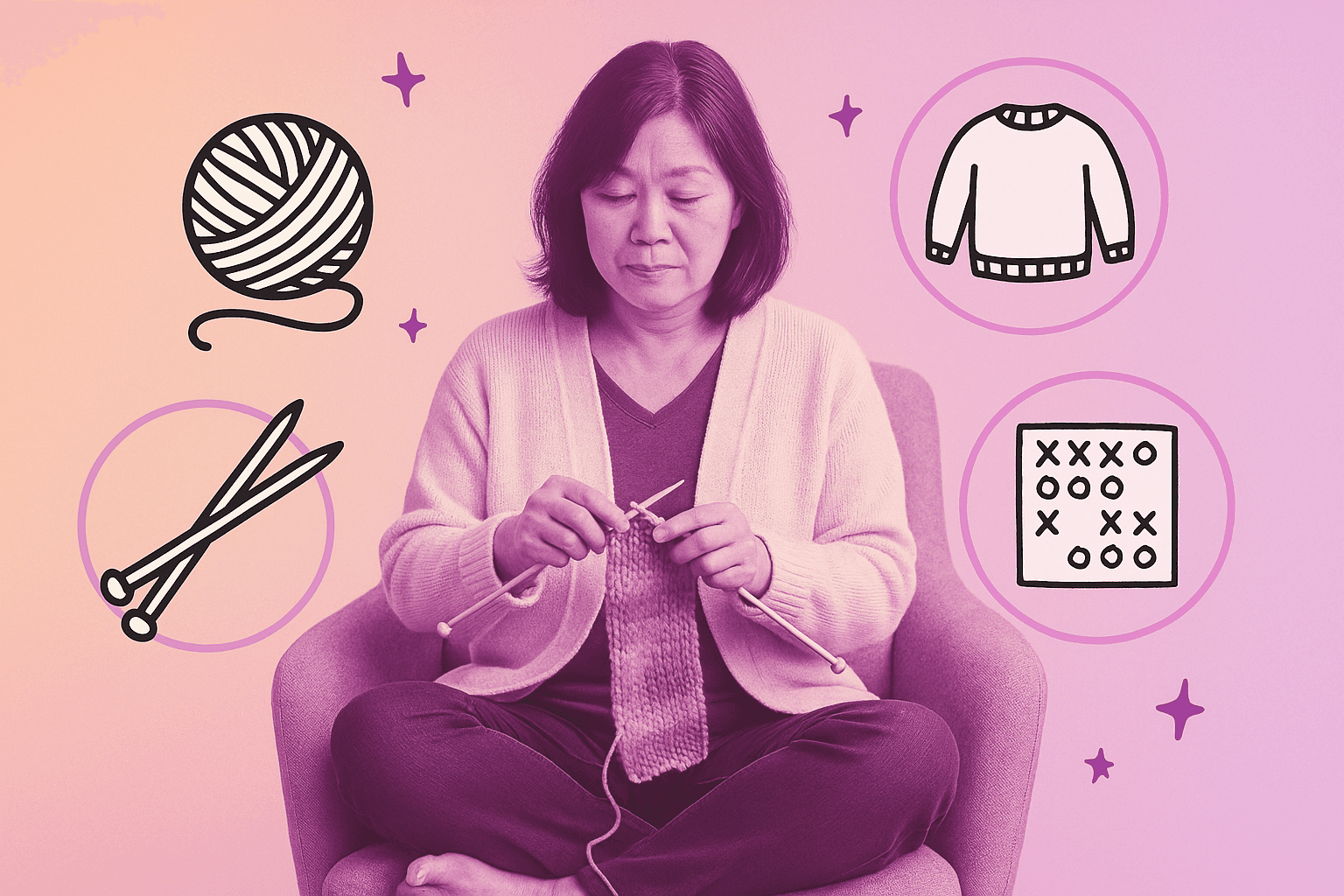
The knitting revival is real - and it's creating massive opportunities for skilled knitters to turn their expertise into profitable online courses.
The knitting revival is real - and it’s creating massive opportunities for skilled knitters to turn their expertise into profitable online courses. Whether you’ve been knitting for decades or just discovered your passion for fiber arts, there’s never been a better time to share your knowledge with eager students worldwide.
Key Facts
Market Size: The global knitting market reached $4.2 billion in 2025 and continues growing as millennials embrace crafting hobbies
Course Pricing: Beginner knitting courses typically sell for $47-$197, while specialized techniques can command $297-$997
Platform Costs: Teachery charges 0% transaction fees on all plans, while competitors like Teachable charge 5% on their Basic plan
Student Demographics: 73% of knitting course buyers are women aged 25-55 seeking stress relief and creative outlets
Ready to turn your knitting skills into income? Try Teachery free for 14 days and start building your course today.
Why Knitting Is Perfect for Online Courses
Knitting translates beautifully to the online learning format. Unlike some crafts that require expensive equipment or messy materials, knitting only needs yarn and needles - supplies your students already have or can easily buy locally.
The visual nature of knitting makes it ideal for video instruction. Students can clearly see your hand movements, stitch formations, and technique demonstrations. They can pause, rewind, and practice at their own pace - something impossible in a traditional in-person class.
Here’s what makes knitting courses especially successful online:
Repeatable techniques: Knitting consists of foundational skills that students use across multiple projects. Once they master your casting-on method or cable technique, they’ll reference your videos repeatedly.
Progressive skill building: You can structure courses from absolute beginner (knit and purl) to advanced techniques (colorwork, shaping, construction). This creates natural upsell opportunities as students advance.
Therapeutic appeal: The 2020-2025 wellness boom has people seeking mindful, meditative hobbies. Knitting courses market themselves as stress relief and self-care, not just craft instruction.
Community aspect: Knitters love sharing their work and getting feedback. Online courses naturally build engaged communities around your expertise.
Essential Modules for Your Knitting Course
Your course content depends on your target audience, but here are proven module structures that sell well:
For Beginner Courses:
Module 1: Getting Started - Choosing needles and yarn, understanding yarn weights, reading patterns basics. Include a simple starter project like a dishcloth or scarf.
Module 2: Essential Stitches - Master knit and purl stitches, combining them into ribbing and seed stitch. Film extreme close-ups of your hands demonstrating each movement.
Module 3: Shaping Basics - Increases, decreases, and simple construction. Perfect for making their first hat or simple sweater section.
Module 4: Fixing Mistakes - Dropped stitches, unknitting, lifelines. This module alone justifies the course price for many students.
Module 5: Finishing Techniques - Binding off, weaving in ends, basic blocking. Include care instructions for their finished projects.
For Intermediate/Advanced Courses:
Cable Techniques - From basic cable crosses to complex Celtic designs. Show multiple methods and troubleshooting tips.
Colorwork Mastery - Fair Isle, intarsia, mosaic knitting. Include tension tips and color selection guidance.
Garment Construction - Top-down vs. bottom-up sweaters, seamless construction, proper fit adjustments.
Advanced Techniques - Short rows, German twisted cast-on, Kitchener stitch, provisional cast-ons.
Each module should include clear video demonstrations, downloadable pattern PDFs, and troubleshooting guides. Students value being able to print reference materials and take notes directly on patterns.
How to Price Your Knitting Course
Knitting course pricing varies dramatically based on your audience and content depth. Here’s what actually works in 2026:
Beginner Courses ($47-$97): Perfect for absolute beginners learning basic stitches and their first few projects. Keep these accessible - many knitters start as hobbyists on tight budgets.
Technique-Specific Courses ($97-$197): Focus on mastering one skill like cables, colorwork, or garment construction. These command higher prices because they solve specific problems for intermediate knitters.
Comprehensive Programs ($197-$497): Multi-month courses that take students from beginner to intermediate, or intermediate to advanced. Include multiple projects and ongoing support.
Premium Masterclasses ($497-$997): Advanced techniques taught by recognized experts, often including live coaching calls, personal feedback on projects, or exclusive patterns.
Don’t underprice your expertise. A $197 course that saves someone months of trial-and-error learning is a bargain. Price based on transformation, not time - students pay for the skill they’ll gain, not hours of content.
Consider your positioning carefully. If you’re teaching basic scarves, you’re competing with free YouTube videos. If you’re teaching heirloom lace techniques or traditional Norwegian colorwork, you can charge premium prices.
How to Find Students and Sell Your Course
The knitting community is tight-knit (pun intended) and eager to learn. Here are the most effective ways to reach your ideal students:
Ravelry Marketing
Ravelry remains the center of the online knitting universe. Create detailed pattern pages, participate in forums, and showcase your expertise through helpful answers to technique questions. Don’t directly promote your course - instead, demonstrate your knowledge and let people discover your teaching naturally.
Many successful course creators start by releasing a few free patterns on Ravelry, building a following, then announcing their course to their established audience.
Instagram and Pinterest
Visual platforms are perfect for knitting content. Post process videos, finished project photos, and quick technique tips. Use relevant hashtags like #knittinglife, #handknit, and technique-specific tags like #cablekitting or #fairisle.
Pinterest is especially powerful for driving long-term traffic. Create pins for your free knitting tips, troubleshooting guides, and pattern modifications. Each pin can drive traffic months or years later.
Local Yarn Shop Partnerships
Many yarn shops are interested in offering online classes, especially post-2020. Approach local shops about promoting your course to their customers. You might offer a small commission or create shop-exclusive bonuses.
This works particularly well for technique-specific courses - shops can recommend your cable course to customers buying cable needles, or your colorwork course to customers purchasing multiple yarn colors.
YouTube Channel Building
Start a YouTube channel with free knitting tutorials. This builds authority and gives potential students a taste of your teaching style. Keep videos focused on specific techniques or common problems.
Your free content should be genuinely helpful while naturally leading to your paid course. For example, a free video on basic cable crosses can mention that your full cable course covers 15 different cable patterns and advanced troubleshooting.
Getting Started with the Right Platform
You need a course platform that handles video hosting, student management, and payments without taking a huge chunk of your revenue. Many knitting instructors start with platforms like Teachable alternatives before realizing they’re losing money to transaction fees.
Teachery stands out for craft-based courses because of its visual customization options. You can match your course design to your brand colors, upload custom fonts, and create a cohesive experience that feels authentically yours. Most other platforms lock you into templates that look identical to thousands of other courses.
The economics matter too. Teachery charges 0% transaction fees on all plans, while platforms like Teachable charge 5% on their Basic plan. On a $197 knitting course, that’s nearly $10 per sale going to platform fees instead of your pocket.
For knitting instructors planning long-term businesses, Teachery’s Lifetime Deal at $950 makes financial sense. After just a few course sales, you’ve covered the platform cost forever - no monthly fees eating into your profits as you scale.
Related Reading
Frequently Asked Questions
How much money can I make selling knitting courses online?
Knitting course income varies widely based on your audience size, course pricing, and marketing efforts. Successful instructors typically earn $500-$5,000 monthly from a single course, with some specialized experts earning $10,000+ monthly. The key is starting with one well-crafted course and building your reputation before expanding your offerings.
What equipment do I need to record a knitting course?
You need a decent camera or smartphone, good lighting (natural window light works well), and a tripod or stable surface for overhead shots of your hands. A simple lapel microphone improves audio quality significantly. Total equipment cost can be under $200 if you already own a smartphone. Focus on clear hand visibility rather than expensive production - students care more about seeing techniques clearly than Hollywood-quality video.
Do I need to be an expert knitter to sell a knitting course online?
You don’t need decades of experience, but you should be genuinely skilled at what you’re teaching and able to troubleshoot common problems. Many successful course creators are intermediate knitters who recently mastered a technique - they remember the learning process and can explain it clearly to other beginners. Focus on one area where you excel rather than trying to cover everything.
Which platform is best for selling knitting courses?
Choose a platform with strong video hosting, design customization, and fair pricing. Teachery works well for knitting courses because you can customize the visual design to match your brand and you keep 100% of your revenue after payment processing. Avoid platforms with monthly limits on students or courses, as successful knitting courses often have long lifespans with steady enrollment growth.
The knitting community is waiting for your expertise. Whether you’re teaching traditional techniques passed down through generations or modern shortcuts you’ve discovered, there are students ready to learn from you. Start your free Teachery trial today and turn your knitting skills into a sustainable income stream.
The knitting revival is real - and it’s creating massive opportunities for skilled knitters to turn their expertise into profitable online courses. Whether you’ve been knitting for decades or just discovered your passion for fiber arts, there’s never been a better time to share your knowledge with eager students worldwide.
Key Facts
Market Size: The global knitting market reached $4.2 billion in 2025 and continues growing as millennials embrace crafting hobbies
Course Pricing: Beginner knitting courses typically sell for $47-$197, while specialized techniques can command $297-$997
Platform Costs: Teachery charges 0% transaction fees on all plans, while competitors like Teachable charge 5% on their Basic plan
Student Demographics: 73% of knitting course buyers are women aged 25-55 seeking stress relief and creative outlets
Ready to turn your knitting skills into income? Try Teachery free for 14 days and start building your course today.
Why Knitting Is Perfect for Online Courses
Knitting translates beautifully to the online learning format. Unlike some crafts that require expensive equipment or messy materials, knitting only needs yarn and needles - supplies your students already have or can easily buy locally.
The visual nature of knitting makes it ideal for video instruction. Students can clearly see your hand movements, stitch formations, and technique demonstrations. They can pause, rewind, and practice at their own pace - something impossible in a traditional in-person class.
Here’s what makes knitting courses especially successful online:
Repeatable techniques: Knitting consists of foundational skills that students use across multiple projects. Once they master your casting-on method or cable technique, they’ll reference your videos repeatedly.
Progressive skill building: You can structure courses from absolute beginner (knit and purl) to advanced techniques (colorwork, shaping, construction). This creates natural upsell opportunities as students advance.
Therapeutic appeal: The 2020-2025 wellness boom has people seeking mindful, meditative hobbies. Knitting courses market themselves as stress relief and self-care, not just craft instruction.
Community aspect: Knitters love sharing their work and getting feedback. Online courses naturally build engaged communities around your expertise.
Essential Modules for Your Knitting Course
Your course content depends on your target audience, but here are proven module structures that sell well:
For Beginner Courses:
Module 1: Getting Started - Choosing needles and yarn, understanding yarn weights, reading patterns basics. Include a simple starter project like a dishcloth or scarf.
Module 2: Essential Stitches - Master knit and purl stitches, combining them into ribbing and seed stitch. Film extreme close-ups of your hands demonstrating each movement.
Module 3: Shaping Basics - Increases, decreases, and simple construction. Perfect for making their first hat or simple sweater section.
Module 4: Fixing Mistakes - Dropped stitches, unknitting, lifelines. This module alone justifies the course price for many students.
Module 5: Finishing Techniques - Binding off, weaving in ends, basic blocking. Include care instructions for their finished projects.
For Intermediate/Advanced Courses:
Cable Techniques - From basic cable crosses to complex Celtic designs. Show multiple methods and troubleshooting tips.
Colorwork Mastery - Fair Isle, intarsia, mosaic knitting. Include tension tips and color selection guidance.
Garment Construction - Top-down vs. bottom-up sweaters, seamless construction, proper fit adjustments.
Advanced Techniques - Short rows, German twisted cast-on, Kitchener stitch, provisional cast-ons.
Each module should include clear video demonstrations, downloadable pattern PDFs, and troubleshooting guides. Students value being able to print reference materials and take notes directly on patterns.
How to Price Your Knitting Course
Knitting course pricing varies dramatically based on your audience and content depth. Here’s what actually works in 2026:
Beginner Courses ($47-$97): Perfect for absolute beginners learning basic stitches and their first few projects. Keep these accessible - many knitters start as hobbyists on tight budgets.
Technique-Specific Courses ($97-$197): Focus on mastering one skill like cables, colorwork, or garment construction. These command higher prices because they solve specific problems for intermediate knitters.
Comprehensive Programs ($197-$497): Multi-month courses that take students from beginner to intermediate, or intermediate to advanced. Include multiple projects and ongoing support.
Premium Masterclasses ($497-$997): Advanced techniques taught by recognized experts, often including live coaching calls, personal feedback on projects, or exclusive patterns.
Don’t underprice your expertise. A $197 course that saves someone months of trial-and-error learning is a bargain. Price based on transformation, not time - students pay for the skill they’ll gain, not hours of content.
Consider your positioning carefully. If you’re teaching basic scarves, you’re competing with free YouTube videos. If you’re teaching heirloom lace techniques or traditional Norwegian colorwork, you can charge premium prices.
How to Find Students and Sell Your Course
The knitting community is tight-knit (pun intended) and eager to learn. Here are the most effective ways to reach your ideal students:
Ravelry Marketing
Ravelry remains the center of the online knitting universe. Create detailed pattern pages, participate in forums, and showcase your expertise through helpful answers to technique questions. Don’t directly promote your course - instead, demonstrate your knowledge and let people discover your teaching naturally.
Many successful course creators start by releasing a few free patterns on Ravelry, building a following, then announcing their course to their established audience.
Instagram and Pinterest
Visual platforms are perfect for knitting content. Post process videos, finished project photos, and quick technique tips. Use relevant hashtags like #knittinglife, #handknit, and technique-specific tags like #cablekitting or #fairisle.
Pinterest is especially powerful for driving long-term traffic. Create pins for your free knitting tips, troubleshooting guides, and pattern modifications. Each pin can drive traffic months or years later.
Local Yarn Shop Partnerships
Many yarn shops are interested in offering online classes, especially post-2020. Approach local shops about promoting your course to their customers. You might offer a small commission or create shop-exclusive bonuses.
This works particularly well for technique-specific courses - shops can recommend your cable course to customers buying cable needles, or your colorwork course to customers purchasing multiple yarn colors.
YouTube Channel Building
Start a YouTube channel with free knitting tutorials. This builds authority and gives potential students a taste of your teaching style. Keep videos focused on specific techniques or common problems.
Your free content should be genuinely helpful while naturally leading to your paid course. For example, a free video on basic cable crosses can mention that your full cable course covers 15 different cable patterns and advanced troubleshooting.
Getting Started with the Right Platform
You need a course platform that handles video hosting, student management, and payments without taking a huge chunk of your revenue. Many knitting instructors start with platforms like Teachable alternatives before realizing they’re losing money to transaction fees.
Teachery stands out for craft-based courses because of its visual customization options. You can match your course design to your brand colors, upload custom fonts, and create a cohesive experience that feels authentically yours. Most other platforms lock you into templates that look identical to thousands of other courses.
The economics matter too. Teachery charges 0% transaction fees on all plans, while platforms like Teachable charge 5% on their Basic plan. On a $197 knitting course, that’s nearly $10 per sale going to platform fees instead of your pocket.
For knitting instructors planning long-term businesses, Teachery’s Lifetime Deal at $950 makes financial sense. After just a few course sales, you’ve covered the platform cost forever - no monthly fees eating into your profits as you scale.
Related Reading
Frequently Asked Questions
How much money can I make selling knitting courses online?
Knitting course income varies widely based on your audience size, course pricing, and marketing efforts. Successful instructors typically earn $500-$5,000 monthly from a single course, with some specialized experts earning $10,000+ monthly. The key is starting with one well-crafted course and building your reputation before expanding your offerings.
What equipment do I need to record a knitting course?
You need a decent camera or smartphone, good lighting (natural window light works well), and a tripod or stable surface for overhead shots of your hands. A simple lapel microphone improves audio quality significantly. Total equipment cost can be under $200 if you already own a smartphone. Focus on clear hand visibility rather than expensive production - students care more about seeing techniques clearly than Hollywood-quality video.
Do I need to be an expert knitter to sell a knitting course online?
You don’t need decades of experience, but you should be genuinely skilled at what you’re teaching and able to troubleshoot common problems. Many successful course creators are intermediate knitters who recently mastered a technique - they remember the learning process and can explain it clearly to other beginners. Focus on one area where you excel rather than trying to cover everything.
Which platform is best for selling knitting courses?
Choose a platform with strong video hosting, design customization, and fair pricing. Teachery works well for knitting courses because you can customize the visual design to match your brand and you keep 100% of your revenue after payment processing. Avoid platforms with monthly limits on students or courses, as successful knitting courses often have long lifespans with steady enrollment growth.
The knitting community is waiting for your expertise. Whether you’re teaching traditional techniques passed down through generations or modern shortcuts you’ve discovered, there are students ready to learn from you. Start your free Teachery trial today and turn your knitting skills into a sustainable income stream.