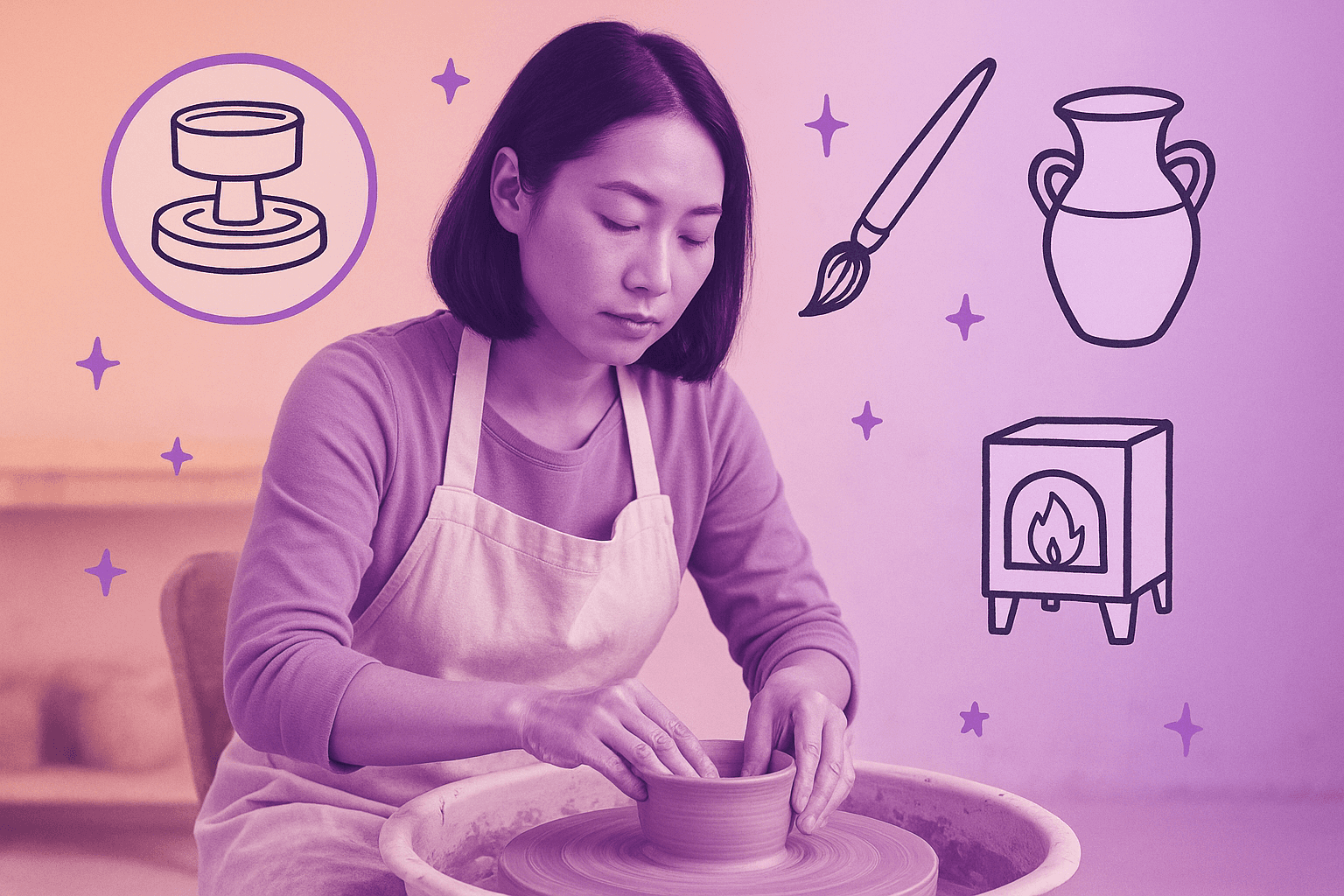
You've spent years perfecting your pottery skills, and now people are asking if you teach. Here's why pottery is actually perfect for online courses, and 2026 is the ideal time to start selling your knowledge.
You’ve spent years perfecting your pottery skills, and now people are asking if you teach. Maybe you’ve been running in-person workshops, or friends keep begging you to show them your techniques. Here’s the thing - pottery is actually perfect for online courses, and 2026 is the ideal time to start selling your knowledge.
Key Facts
Pottery course pricing ranges from $47-$997 - depending on depth and included materials
Teachery charges 0% transaction fees - while competitors like Teachable charge 5% on basic plans
Online pottery courses can reach students globally - not limited by studio space or location
Video-based pottery instruction works exceptionally well - hands-on techniques translate perfectly to screen
The pottery market is hungry for quality online instruction. People want to learn from home, at their own pace, without the intimidation factor of a group class. You just need to package your knowledge the right way.
Ready to turn your pottery expertise into a profitable online course? Try Teachery free for 14 days and see how easy it is to build a beautiful course site.
Why Pottery is Perfect for Online Courses
Most people think pottery has to be taught in person. They’re wrong. Here’s why pottery actually works brilliantly as an online course:
Visual learning dominates pottery. Your students need to see hand positions, throwing techniques, and glazing methods. A well-shot video shows these details better than standing behind someone in a crowded studio. You can use multiple camera angles, slow-motion footage, and close-ups that no in-person class can match.
Students can pause and replay. When you’re learning to center clay or pull walls, you need to watch the same movement dozens of times. In a physical class, students miss crucial moments or feel rushed. Online, they control the pace completely.
No studio limitations. Your in-person classes are capped by wheel availability and studio space. Online, you can serve hundreds of students simultaneously. Geographic boundaries disappear - you can teach someone in Australia the same techniques you’d show someone across town.
Students can work with their own equipment. Many people already have pottery wheels at home or access through community centers. Your course becomes the missing piece - the expert instruction they can’t get locally.
Beginner-friendly market. Pottery has exploded in popularity thanks to social media and shows like The Great Pottery Throw Down. There’s huge demand from beginners who want to start but feel intimidated by group classes.
Premium pricing potential. Pottery courses command higher prices than many other online courses because the skill is specialized, artistic, and has real-world applications. People will pay well for quality instruction.
What to Include in Your Pottery Course
Here’s how to structure a pottery course that actually works online:
Module 1: Clay Fundamentals and Setup
Cover clay types, proper storage, wedging techniques, and workspace setup. Show students how to prepare clay and organize their area for success. Include a section on troubleshooting common clay problems.
Module 2: Wheel Throwing Basics
Start with centering - this is where most beginners struggle. Film multiple angles of your hands and the clay. Cover opening the clay, pulling walls, and basic cylinder forms. Include common mistakes and how to fix them.
Module 3: Essential Forms (Bowls, Mugs, Plates)
Teach the fundamental shapes every potter needs to master. Break down each form step-by-step, showing variations in size and proportions. Include tips for consistent wall thickness and shape.
Module 4: Trimming and Finishing
Show proper trimming techniques for different forms. Cover foot attachment, surface texturing, and preparing pieces for firing. Include timing - when clay is ready for each step.
Module 5: Glazing Fundamentals
Explain glaze chemistry basics, application techniques (dipping, brushing, pouring), and layering effects. Show glaze combinations and firing results. Include troubleshooting glaze defects.
Module 6: Firing Process
Cover bisque firing, glaze firing, and kiln loading strategies. Explain temperature curves and firing schedules. Include alternatives for students without kiln access (community studios, firing services).
Module 7: Advanced Techniques
Introduce handles, spouts, lids, and decorative techniques like slip trailing or sgraffito. This gives intermediate students room to grow.
Module 8: Troubleshooting and Problem-Solving
Create a comprehensive guide to common pottery problems - cracking, warping, glaze issues, firing problems. This becomes a valuable reference students return to repeatedly.
How to Price Your Pottery Course
Pottery courses can command premium pricing because the skill is specialized and valuable. Here’s how to price yours:
Self-Paced Video Course: $97-$297
This is your core offering - comprehensive video lessons students can access forever. Price at $97 for a basic beginner course (4-6 hours of content), $197 for intermediate (8-12 hours), or $297 for a complete beginner-to-advanced program (15+ hours).
Course + Materials Bundle: $197-$497
Partner with pottery suppliers to include starter clay, basic tools, or glazes. Students pay more but get everything they need to start immediately. This removes a major barrier for beginners who don’t know what to buy.
Premium Course with Coaching: $497-$997
Add monthly group Q&A calls, private Facebook group access, or one-on-one video critiques. Students submit photos of their work for personalized feedback. This pricing works because pottery students genuinely need guidance troubleshooting their pieces.
Masterclass Format: $47-$97
Create focused courses on specific techniques - “Mastering the Perfect Mug Handle” or “Glaze Layering Secrets.” Keep these short (2-4 hours) and laser-focused. Great for building an audience before launching your main course.
Real talk: Don’t undervalue pottery instruction. A single in-person pottery class often costs $40-60 for 2-3 hours. Your online course provides 10-20+ hours of instruction students can repeat forever. Price accordingly.
How to Find Students and Sell Your Course
Marketing pottery courses requires showing your work and building trust. Here are four strategies that actually work:
Instagram and TikTok Content
Post satisfying pottery videos - centering clay, pulling walls, trimming pieces. Use trending sounds and pottery hashtags. Show your process, not just finished pieces. Include “pottery fails” content - people love seeing mistakes and fixes. Add text overlays explaining techniques. This builds your audience and establishes expertise.
Pinterest Strategy
Create boards for pottery techniques, glaze combinations, and finished pieces. Pin high-quality photos of your work with SEO-optimized descriptions. Pinterest users actively search for pottery tutorials and inspiration. Each pin can drive traffic to your course landing page for months.
Local Pottery Community Partnerships
Connect with local pottery studios, community centers, and art schools. Many have students who want additional instruction or can’t attend regular classes. Offer affiliate commissions to instructors who recommend your course. Partner with studios that don’t offer advanced classes - you fill their gap.
YouTube Channel Development
Create free pottery tutorials that showcase your teaching style. Focus on common beginner problems and quick tips. Include calls-to-action directing viewers to your comprehensive paid course. YouTube pottery content performs well and builds long-term authority in the space.
The key is consistency. Pick 1-2 platforms and post regularly for at least 3 months before expecting significant sales. Pottery students need to see your work and trust your expertise before investing in a course.
Choosing the Right Platform for Your Pottery Course
The platform you choose affects everything - how your course looks, what you pay in fees, and how easily students can access your content.
Most pottery instructors need a platform that handles video well and gives them design control. Your course needs to look as beautiful as your pottery. Generic templates won’t cut it.
We’ve seen pottery instructors struggle with platforms like Teachable (which charges 5% transaction fees on basic plans) or get frustrated with the cookie-cutter look of most course sites. If you’re serious about building a pottery education business, you need a platform that grows with you.
Teachery works particularly well for creative instructors because it offers unlimited design customization - custom colors, fonts, layouts that match your artistic brand. It’s specifically built for creatives who want their course site to reflect their artistic style.
Plus, Teachery charges 0% transaction fees on all plans and offers a Lifetime Deal for $950 - pay once and own it forever. When you’re starting out, every dollar counts, and not having to pay monthly platform fees gives you more room to invest in video equipment and materials.
Other platforms to consider: Kajabi alternatives if you want all-in-one marketing tools, or Gumroad alternatives if you plan to sell individual pottery tutorials alongside your main course.
Getting Started with Your Pottery Course
Here’s your action plan:
Week 1-2: Plan and outline your course. Choose your target audience (complete beginners vs. intermediate potters) and create detailed module outlines. Write scripts for your first few lessons.
Week 3-4: Set up your filming space. Invest in good lighting and multiple camera angles. Test your setup with a few sample videos before filming everything.
Week 5-8: Film your content. Batch film similar content together. Film extra close-ups of hand positions and clay behavior - you’ll use these as cutaway shots.
Week 9-10: Edit and upload. Keep editing simple - focus on clear audio and smooth transitions. Upload to your course platform and organize into logical modules.
Week 11-12: Build your marketing assets. Create social media content, write your course sales page, and start building anticipation with your audience.
The hardest part is starting. But once you film that first lesson and see how well pottery techniques translate to video, you’ll wonder why you waited so long.
Your pottery skills have value. People want to learn from you. The online course market is ready for quality pottery instruction that goes beyond basic throwing techniques.
Ready to turn your pottery expertise into a profitable online course? Start your free Teachery trial and build a course site that’s as beautiful as your pottery.
Related Reading
Frequently Asked Questions
How much can I charge for an online pottery course?
Pottery courses typically range from $47 for focused technique courses to $997 for comprehensive programs with coaching. Most successful pottery instructors price self-paced video courses between $97-$297, depending on content depth and experience level covered. Premium courses with live coaching or materials bundles can command $497-$997.
What equipment do I need to create a pottery course online?
You’ll need a decent camera (smartphone works fine to start), good lighting setup, and multiple filming angles to capture hand positions and clay movement clearly. A tripod, ring light, and external microphone improve production quality significantly. Most importantly, film in a clean, organized pottery space that showcases your professionalism.
Can pottery really be taught effectively online?
Yes, pottery translates exceptionally well to online instruction because it’s primarily visual learning. Students can pause, replay, and study hand positions and techniques at their own pace. Multiple camera angles and close-up shots actually provide better views than students get in crowded studio classes. The key is filming detailed demonstrations of each step.
Which platform is best for selling pottery courses online?
Teachery works particularly well for pottery instructors because it offers unlimited design customization to match your artistic brand, charges 0% transaction fees, and includes a lifetime pricing option. Other platforms like Teachable charge 5% fees on basic plans, while Teachery lets you keep all your revenue except standard payment processing fees.
You’ve spent years perfecting your pottery skills, and now people are asking if you teach. Maybe you’ve been running in-person workshops, or friends keep begging you to show them your techniques. Here’s the thing - pottery is actually perfect for online courses, and 2026 is the ideal time to start selling your knowledge.
Key Facts
Pottery course pricing ranges from $47-$997 - depending on depth and included materials
Teachery charges 0% transaction fees - while competitors like Teachable charge 5% on basic plans
Online pottery courses can reach students globally - not limited by studio space or location
Video-based pottery instruction works exceptionally well - hands-on techniques translate perfectly to screen
The pottery market is hungry for quality online instruction. People want to learn from home, at their own pace, without the intimidation factor of a group class. You just need to package your knowledge the right way.
Ready to turn your pottery expertise into a profitable online course? Try Teachery free for 14 days and see how easy it is to build a beautiful course site.
Why Pottery is Perfect for Online Courses
Most people think pottery has to be taught in person. They’re wrong. Here’s why pottery actually works brilliantly as an online course:
Visual learning dominates pottery. Your students need to see hand positions, throwing techniques, and glazing methods. A well-shot video shows these details better than standing behind someone in a crowded studio. You can use multiple camera angles, slow-motion footage, and close-ups that no in-person class can match.
Students can pause and replay. When you’re learning to center clay or pull walls, you need to watch the same movement dozens of times. In a physical class, students miss crucial moments or feel rushed. Online, they control the pace completely.
No studio limitations. Your in-person classes are capped by wheel availability and studio space. Online, you can serve hundreds of students simultaneously. Geographic boundaries disappear - you can teach someone in Australia the same techniques you’d show someone across town.
Students can work with their own equipment. Many people already have pottery wheels at home or access through community centers. Your course becomes the missing piece - the expert instruction they can’t get locally.
Beginner-friendly market. Pottery has exploded in popularity thanks to social media and shows like The Great Pottery Throw Down. There’s huge demand from beginners who want to start but feel intimidated by group classes.
Premium pricing potential. Pottery courses command higher prices than many other online courses because the skill is specialized, artistic, and has real-world applications. People will pay well for quality instruction.
What to Include in Your Pottery Course
Here’s how to structure a pottery course that actually works online:
Module 1: Clay Fundamentals and Setup
Cover clay types, proper storage, wedging techniques, and workspace setup. Show students how to prepare clay and organize their area for success. Include a section on troubleshooting common clay problems.
Module 2: Wheel Throwing Basics
Start with centering - this is where most beginners struggle. Film multiple angles of your hands and the clay. Cover opening the clay, pulling walls, and basic cylinder forms. Include common mistakes and how to fix them.
Module 3: Essential Forms (Bowls, Mugs, Plates)
Teach the fundamental shapes every potter needs to master. Break down each form step-by-step, showing variations in size and proportions. Include tips for consistent wall thickness and shape.
Module 4: Trimming and Finishing
Show proper trimming techniques for different forms. Cover foot attachment, surface texturing, and preparing pieces for firing. Include timing - when clay is ready for each step.
Module 5: Glazing Fundamentals
Explain glaze chemistry basics, application techniques (dipping, brushing, pouring), and layering effects. Show glaze combinations and firing results. Include troubleshooting glaze defects.
Module 6: Firing Process
Cover bisque firing, glaze firing, and kiln loading strategies. Explain temperature curves and firing schedules. Include alternatives for students without kiln access (community studios, firing services).
Module 7: Advanced Techniques
Introduce handles, spouts, lids, and decorative techniques like slip trailing or sgraffito. This gives intermediate students room to grow.
Module 8: Troubleshooting and Problem-Solving
Create a comprehensive guide to common pottery problems - cracking, warping, glaze issues, firing problems. This becomes a valuable reference students return to repeatedly.
How to Price Your Pottery Course
Pottery courses can command premium pricing because the skill is specialized and valuable. Here’s how to price yours:
Self-Paced Video Course: $97-$297
This is your core offering - comprehensive video lessons students can access forever. Price at $97 for a basic beginner course (4-6 hours of content), $197 for intermediate (8-12 hours), or $297 for a complete beginner-to-advanced program (15+ hours).
Course + Materials Bundle: $197-$497
Partner with pottery suppliers to include starter clay, basic tools, or glazes. Students pay more but get everything they need to start immediately. This removes a major barrier for beginners who don’t know what to buy.
Premium Course with Coaching: $497-$997
Add monthly group Q&A calls, private Facebook group access, or one-on-one video critiques. Students submit photos of their work for personalized feedback. This pricing works because pottery students genuinely need guidance troubleshooting their pieces.
Masterclass Format: $47-$97
Create focused courses on specific techniques - “Mastering the Perfect Mug Handle” or “Glaze Layering Secrets.” Keep these short (2-4 hours) and laser-focused. Great for building an audience before launching your main course.
Real talk: Don’t undervalue pottery instruction. A single in-person pottery class often costs $40-60 for 2-3 hours. Your online course provides 10-20+ hours of instruction students can repeat forever. Price accordingly.
How to Find Students and Sell Your Course
Marketing pottery courses requires showing your work and building trust. Here are four strategies that actually work:
Instagram and TikTok Content
Post satisfying pottery videos - centering clay, pulling walls, trimming pieces. Use trending sounds and pottery hashtags. Show your process, not just finished pieces. Include “pottery fails” content - people love seeing mistakes and fixes. Add text overlays explaining techniques. This builds your audience and establishes expertise.
Pinterest Strategy
Create boards for pottery techniques, glaze combinations, and finished pieces. Pin high-quality photos of your work with SEO-optimized descriptions. Pinterest users actively search for pottery tutorials and inspiration. Each pin can drive traffic to your course landing page for months.
Local Pottery Community Partnerships
Connect with local pottery studios, community centers, and art schools. Many have students who want additional instruction or can’t attend regular classes. Offer affiliate commissions to instructors who recommend your course. Partner with studios that don’t offer advanced classes - you fill their gap.
YouTube Channel Development
Create free pottery tutorials that showcase your teaching style. Focus on common beginner problems and quick tips. Include calls-to-action directing viewers to your comprehensive paid course. YouTube pottery content performs well and builds long-term authority in the space.
The key is consistency. Pick 1-2 platforms and post regularly for at least 3 months before expecting significant sales. Pottery students need to see your work and trust your expertise before investing in a course.
Choosing the Right Platform for Your Pottery Course
The platform you choose affects everything - how your course looks, what you pay in fees, and how easily students can access your content.
Most pottery instructors need a platform that handles video well and gives them design control. Your course needs to look as beautiful as your pottery. Generic templates won’t cut it.
We’ve seen pottery instructors struggle with platforms like Teachable (which charges 5% transaction fees on basic plans) or get frustrated with the cookie-cutter look of most course sites. If you’re serious about building a pottery education business, you need a platform that grows with you.
Teachery works particularly well for creative instructors because it offers unlimited design customization - custom colors, fonts, layouts that match your artistic brand. It’s specifically built for creatives who want their course site to reflect their artistic style.
Plus, Teachery charges 0% transaction fees on all plans and offers a Lifetime Deal for $950 - pay once and own it forever. When you’re starting out, every dollar counts, and not having to pay monthly platform fees gives you more room to invest in video equipment and materials.
Other platforms to consider: Kajabi alternatives if you want all-in-one marketing tools, or Gumroad alternatives if you plan to sell individual pottery tutorials alongside your main course.
Getting Started with Your Pottery Course
Here’s your action plan:
Week 1-2: Plan and outline your course. Choose your target audience (complete beginners vs. intermediate potters) and create detailed module outlines. Write scripts for your first few lessons.
Week 3-4: Set up your filming space. Invest in good lighting and multiple camera angles. Test your setup with a few sample videos before filming everything.
Week 5-8: Film your content. Batch film similar content together. Film extra close-ups of hand positions and clay behavior - you’ll use these as cutaway shots.
Week 9-10: Edit and upload. Keep editing simple - focus on clear audio and smooth transitions. Upload to your course platform and organize into logical modules.
Week 11-12: Build your marketing assets. Create social media content, write your course sales page, and start building anticipation with your audience.
The hardest part is starting. But once you film that first lesson and see how well pottery techniques translate to video, you’ll wonder why you waited so long.
Your pottery skills have value. People want to learn from you. The online course market is ready for quality pottery instruction that goes beyond basic throwing techniques.
Ready to turn your pottery expertise into a profitable online course? Start your free Teachery trial and build a course site that’s as beautiful as your pottery.
Related Reading
Frequently Asked Questions
How much can I charge for an online pottery course?
Pottery courses typically range from $47 for focused technique courses to $997 for comprehensive programs with coaching. Most successful pottery instructors price self-paced video courses between $97-$297, depending on content depth and experience level covered. Premium courses with live coaching or materials bundles can command $497-$997.
What equipment do I need to create a pottery course online?
You’ll need a decent camera (smartphone works fine to start), good lighting setup, and multiple filming angles to capture hand positions and clay movement clearly. A tripod, ring light, and external microphone improve production quality significantly. Most importantly, film in a clean, organized pottery space that showcases your professionalism.
Can pottery really be taught effectively online?
Yes, pottery translates exceptionally well to online instruction because it’s primarily visual learning. Students can pause, replay, and study hand positions and techniques at their own pace. Multiple camera angles and close-up shots actually provide better views than students get in crowded studio classes. The key is filming detailed demonstrations of each step.
Which platform is best for selling pottery courses online?
Teachery works particularly well for pottery instructors because it offers unlimited design customization to match your artistic brand, charges 0% transaction fees, and includes a lifetime pricing option. Other platforms like Teachable charge 5% fees on basic plans, while Teachery lets you keep all your revenue except standard payment processing fees.